
Cross-border payments and collections were never really designed for speed. For decades, the mechanics behind them have remained among the slowest and least transparent parts of global trade. Exporters, particularly India’s MSMEs, continue to face delayed settlements, fragmented banking processes, compliance-heavy banking procedures, limited access to working capital, and high foreign exchange costs that erode margins.
For exporters and procurement leaders, payment friction is no longer a back-office issue. It directly affects cash flow predictability, pricing decisions, and the ability to scale cross-border trade reliably.
Fintechs are now reshaping this landscape. As digital verification, API-led payments, and platform-based trade finance become mainstream, India finds itself at the centre of a transformative shift, one that could meaningfully reduce costs, settlement times, and dependence on legacy financial systems.
The old cross-border payment problem
Cross-border payments have historically relied on multi-layered correspondent banking systems, manual document reviews, and SWIFT-based messaging, often taking several days to complete. MSME exporters are particularly vulnerable: payment delays directly constrain working capital and margin predictability.
A DGFT-sponsored study notes that Indian exporters often require 5 to 7 documents for every shipment, and manual review adds “significant hurdles in trade finance disbursement” (DGFT Trade Finance Study, 2024). The global view is equally stark: 80% of world trade depends on trade finance instruments, yet MSMEs consistently face the highest rejection rates (ADB Trade Finance Gaps, Growth, and Job Survey 2023).
Traditional cross-border payments are built on correspondent banking chains that rely on multiple intermediaries, each adding time, fee checks and delays. For MSME exporters, these legacy systems create recurring operational constraints:
- 30 to 90 day settlement cycles, depending on buyer location, and bank coordination
- Opaque tracking, where payment status cannot be viewed in real time
- High FX spreads that reduce final realisation
- Multiple SWIFT deductions along the route
- Paper-heavy compliance, including invoices, BLs, and KYC documents
- Handling errors caused by mismatched documents or inconsistent bank formats
In this system, speed, compliance, and liquidity often work against each other, creating structural constraints for exporters.
Fintech’s breakthrough moment in trade finance
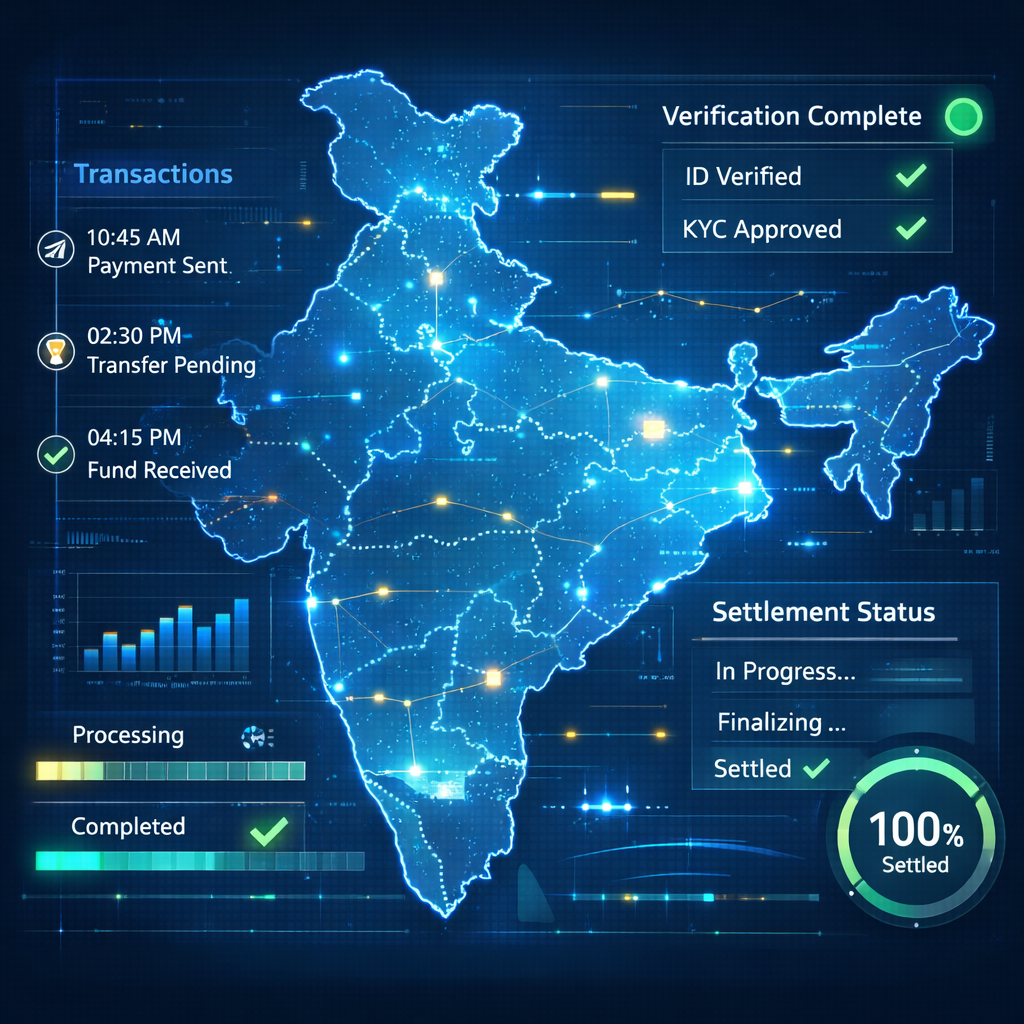
Fintech platforms are digitising the core building blocks of trade finance, including documents, verification, credit assessment, and settlement, replacing paper-heavy bank-centred workflows with API-led payment orchestration.
Empirical research shows fintech adoption stimulates cross-border trade more than domestic trade by reducing information gaps and financing barriers (Journal of Asian Economics; ScienceDirect, “Has Fintech reshaped global trade?”, 2024). In practice, this means exporters can now:
- Open multi-currency virtual accounts
- Receive settlement notifications in real time
- Exchange digital documents instead of physical copies
- Connect directly with financiers without navigating traditional intermediaries
Fintechs are not replacing banks, but extending what they can offer by dissolving bottlenecks in documentation, verification, and settlement.
Why exporters need predictable payments
Following tariff realignments in 2024-25, exporters have tighter compliance scrutiny and more frequent documentation checks. This has intensified payment delays and increased the need for predictable settlement cycles.
Modern fintech infrastructure helps exporters manage uncertainty by linking payments to digital trade milestones rather than requiring repeated manual submissions. These are key advantages highlighted by multiple trade economists in their reviews of the impact of fintechs on global trade patterns (ScienceDirect, 2024). Fintech-led payment systems help exporters navigate this uncertainty by:
- Digitally linking payment triggers to logistics proof, reducing back-and-forth.
- Circumventing bottlenecks caused by customs delays and tariff classification checks
Regulatory collaboration
Regulators like the Reserve Bank of India (RBI), the International Financial Services Centres Authority (IFSCA), and the National Payments Corporation of India (NPCI) are enabling innovation to reduce settlement delays and improve export finance.
The DGFT’s Trade Finance Study notes that digitisation can cut documentary turnaround time for export credit by up to 70% for MSMEs (DGFT, 2024). This shift was accelerated by fintech platforms that integrated logistics, compliance, and payment data into unified dashboards.
India’s IFSC framework and the future of cross-border finance
India’s International Financial Services Centre (IFSC) at the Gujarat International Finance Tec-City (GIFT City) is the backbone of trade finance. GIFT City is developing a fintech-enabled International Financial Centre with pilots for digital letters of credit, blockchain validation, and cross-border payment rails. This authority oversees:
- Foreign currency accounts for exporters, reducing forced conversions
- Trade finance through the global market, often at lower rates
- International factoring and invoice discounting
- Multi-currency collection amounts
- Fintech innovation sandboxes, enabling compliant cross-border payment testing
- Risk-management tools like derivatives for hedging FX exposure
How exporters benefit through digital payments
Indian exporters have historically faced higher rejections from traditional trade-finance channels due to documentation errors, collateral constraints, and inconsistent financial histories. Fintech platforms directly address these gaps in several ways:
1. Digital document verification
Digital documentation frameworks minimise errors and reduce the manual burden associated with traditional cross-border compliance, making processes such as FIRA generation, invoice matching, and SWIFT reconciliation far more predictable.
Some platforms use blockchain-based registries to validate trade documents digitally. This enables banks and financiers to validate bills of lading, invoices, and certificates without requiring multiple physical copies (Billcut).
2. AI-driven compliance screening
Machine-learning engines detect anomalies in HS codes, country-of-origin claims, and invoice values, reducing delays in manual review.
3. Platform-based invoice financing
Platforms connect exporters directly with NBFCs and banks, reducing document-handling time and improving pricing transparency.
4. Real-time trade visibility
When shipments cross verified logistics checkpoints, fintech systems can automatically trigger pre-approved disbursals, accelerating credit access.
The result is a system where exporters no longer wait for physical documents to move from the port to the bank to the buyer. Instead, verification is digital, instantaneous, and resilient to delays. Several independent studies affirm the structural impact of fintech on global trade:
- Fintech increases cross-border trade volumes more than domestic trade (ScienceDirect, 2024)
- Digitising trade documentation could reduce global transaction costs by up to 20% (World Economic Forum)
The road ahead
Taken together, these developments point to a structural shift rather than incremental improvement; fintechs aren’t just improving convenience but reshaping the cost, speed, and inclusiveness of global commerce.
At a micro level, India’s export ecosystem is being redefined by a combination of policy momentum and technological adoption, where exporters benefit from:
- Unified digital identity infrastructure (Aadhar)
- Interoperable financial platforms (UPI, account aggregator)
- Large-scale e-invoicing and GST integration
- Regulatory support from RBI, Ministry of Commerce, and IFSCA
DGFT’s Trade Finance Study emphasised that improving access to digital trade infrastructure will be “fundamental to boosting India’s export competitiveness over the next decade” (DGFT, 2024).
Fintech-enabled trade finance has become essential infrastructure, not an incremental enhancement, for India’s USD 2 trillion annual export target by 2030 (Ministry of Commerce). By compressing settlement delays, improving compliance accuracy, and democratising access to credit, fintech is transforming how Indian exporters engage with international markets.

Leave a Reply