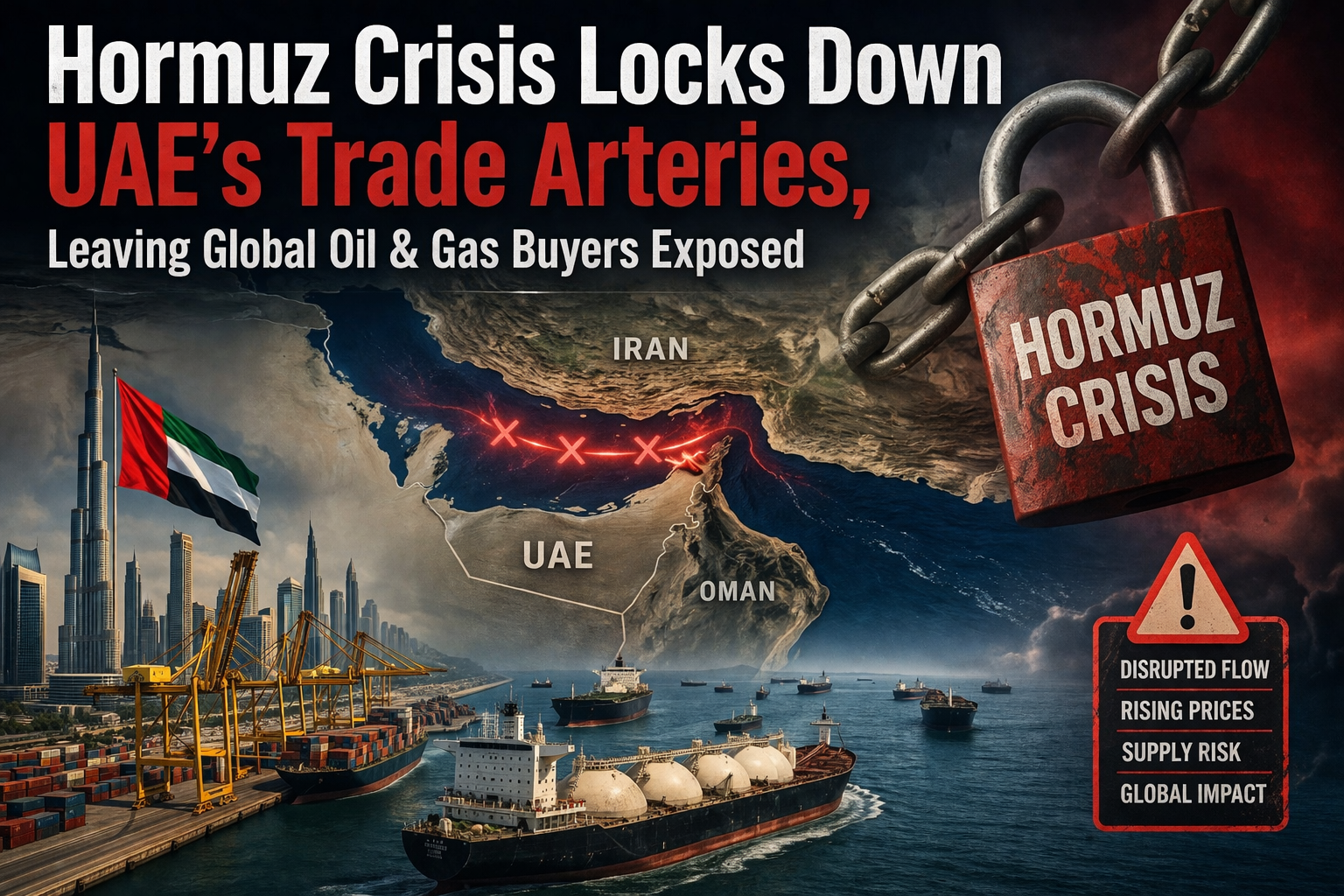
Dubai’s Jebel Ali Port loses $530m in daily trade as procurement teams look for alternatives.
The 2026 Strait of Hormuz crisis, triggered by the US-Israeli conflict with Iran, has dealt a direct blow to the UAE’s role as a global trade hub. As a result, international oil & gas buyers are confronted in real time.
Jebel Ali, the world’s 9th-busiest container port, processes an average of $530 million per day in non-oil trade. Since Iranian strikes targeted the port area in late February, vessel crossings through the Strait have collapsed by an estimated 88-100%. MarineTraffic data shows 49 container ships, representing 329,661 TEU of capacity, remain anchored outside the Persian Gulf, unable to reach their UAE berths.
The operational fallout is also immediate. Freight costs have surged 15-30%, lead times have stretched by 1-3 weeks, and war-risk insurance now excludes most Gulf transit cargo. Abu Dhabi and Dubai’s stock exchanges were also suspended on March 2-3.
UNCTAD projects global merchandise trade growth will decelerate from 4.7% in 2025 to just 1.5-2.5% in 2026. The Gulf-reliant buyers are absorbing the most damage.
However, disruptions are also encouraging buyers to rethink procurement strategies. Many buyers are exploring alternative routes, diversifying suppliers, and strengthening procurement planning.
As trade flows gradually stabilize, strategic steps can help businesses maintain supply continuity and build more resilient sourcing frameworks during this ongoing uncertainty.

Leave a Reply