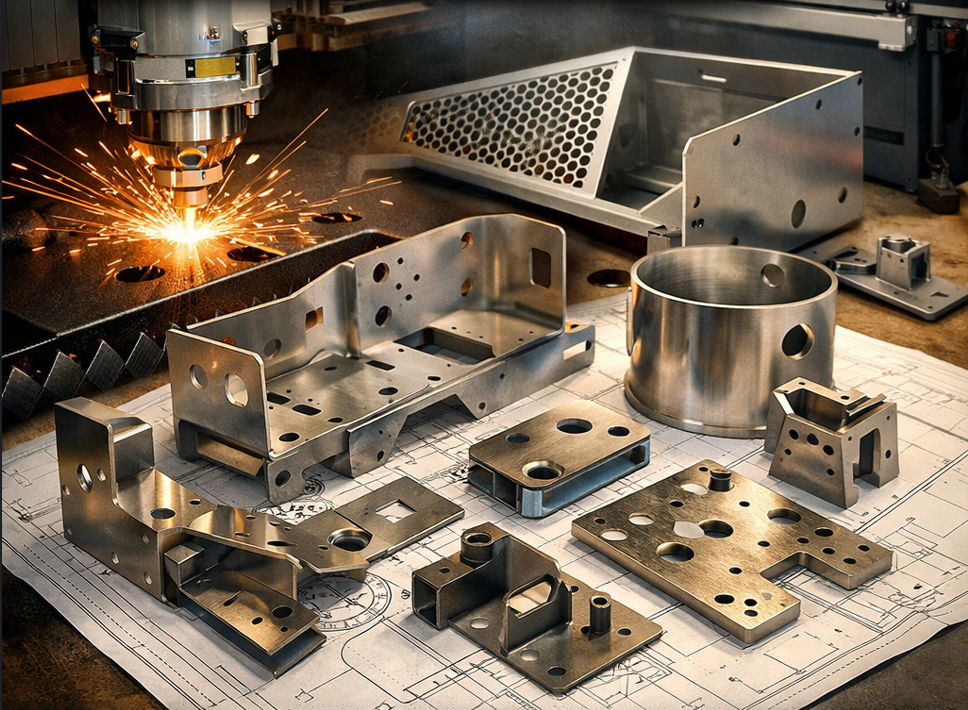
Sheet metal fabrication is widely used for custom components, yet sourcing these parts can be complex. For industrial buyers and OEMs, sourcing these components from external partners is not just a purchasing task. It is a technical decision that affects product performance, cost efficiency, and delivery reliability.
Based on new industry estimates from Deloitte, manufacturers can lower production costs by 20% when they rely on specialised fabrication partners. They even improve overall turnaround time when accessing advanced equipment and expertise.
But these benefits only materialise when sourcing decisions are made well. This guide outlines key steps for sourcing custom components from sheet metal fabrication services.
- Define your component requirements.
Before approaching suppliers, it is essential to define what needs to be built. You should first ask:
- What is the ultimate function of the component?
- What are the required tolerances and critical dimensions?
- What volumes are expected for the order or annually?
- Are there additional needs such as coating, assembly, or hardware insertion?
- Select the right material
McKinsey reports that material selection decisions can influence up to 60% of total product cost in manufacturing. Material choice directly impacts the performance and lifestyle of the component across parameters like:
- Aluminium for lightweight applications.
- Carbon steel for strength
- Stainless steel for corrosion resistance
- Copper and brass for electrical conductivity.
- Titanium for high-performance environments.
- Evaluate fabrication capabilities
Suppliers’ capability defines what designs can be executed without compromise. Custom components require suppliers who can handle variation in precision. In this context, industrial buyers should look for:
- CNC laser or waterjet cutting systems.
- In-house finishing capabilities.
- High-tonnage press brakes for complex bends
- Focus on quality assurance
Quality check points must be a part of the process and not an end-result procedure. Most OEMs start with pilot batches to help them validate if a supplier can meet the expectations they had in mind. Discuss these points with suppliers:
- Raw material verification methods.
- In process inspection checkpoints.
- Final dimensional inspection procedures.
- Availability of test reports and certifications.
Researching, Shortlisting Qualified Manufacturing Partners
Some suppliers might not have the necessary expertise to for custom metal manufacturing and multi-step fabrication. Evaluating capability up front to guarantee the following:
- Experience with similar components.
- Ability to interpret detailed drawings.
- Certifications such as ISO 9001.
- Client references or case studies.
Deloitte observed that gaps in supplier expertise resulted in several production delays in outsourced manufacturing. The key issues arise primarily out of poor interpretation of design intent, and not the lack of appropriate equipment.
- Communication and documentation
Smooth sheet metal fabrication sourcing depends on clear communication, and the stakes are highest with custom components, where small deviations can disrupt the fit and function of components being designed:
- Revision control is maintained across all stakeholders.
- Drawings shared in the PDF, STP, and DXF formats; each manufacturer has their own file format requirement.
- A single point of contact is assigned.
- Regular updates are scheduled.
McKinsey research indicates that a significant share of manufacturing defects can be traced back to miscommunication during design transfer rather than production errors.
2. Establishing full project terms, expectations
Contractual terms must be clear when it comes to custom fabrication. A structured agreement ensures that factors like design ownership and revision history don’t become friction points. It is also a safeguard against risk disputes:
- Pricing breakdown and payment terms.
- Full scope of work detailing all specifications
- Delivery schedules.
- Ownership of designs and drawings.
- Issue resolution mechanisms.
The IBEF (India Brand Equity Foundation) observed that Indian engineering exports, including fabricated metal components, were valued at $100 billion recently. The demand was traced back to sectors like oil and gas, automotive, industrial equipment, and fluid management. Supporting this growth where other advantages like:
- A strong number of CNC-enabled fabrication facilities
- Increased adoption of global quality certifications and standards
- Competitive costs when compared with Western markets
- Extensive verified fabrication and welding experts
Many Indian sheet metal fabrication suppliers hold ISO certification and have developed processes that meet traceability, documentation and quality control requirements of global buyers.
For buyers, this opens a practical path to sourcing custom sheet metal components at competitive costs without compromising quality branch marks. This outcome depends on how well the supplier selection is carried out.
Discover and connect with sheet metal fabrication suppliers on rivexa the digital way, the easier way.

Leave a Reply