
Sustainability-first children’s wear brands across the United Kingdom and Europe, offering organic cotton newborn onesies among other product categories, have largely addressed the ethical intent question. Organic fibres, certified factories, and responsible labour practices are already embedded into their sourcing strategies.
The operational challenges emerge later, when brands scale internationally, expand wholesale distribution, and transition from limited collections to repeat seasonal programmes.

Across sustainability-led kidswear brands reviewed in recent sourcing assessments, international reach typically spans 30 to 50 export markets, supported by a mix of direct-to-consumer and wholesale channels.
At this stage, production moves from pilot-scale runs to hundreds of consignments per year, and maintaining certification integrity becomes an operational constraint rather than a matter of values.
Managing supplier network complexity in high-growth programmes
At early stages, sustainability-focused brands typically rely on a small number of long-term manufacturing partners. Across the multiple sourcing models in practice, more than 70% of total garment volumes are produced by a limited group of suppliers, with individual relationships lasting 15 to 18 years.
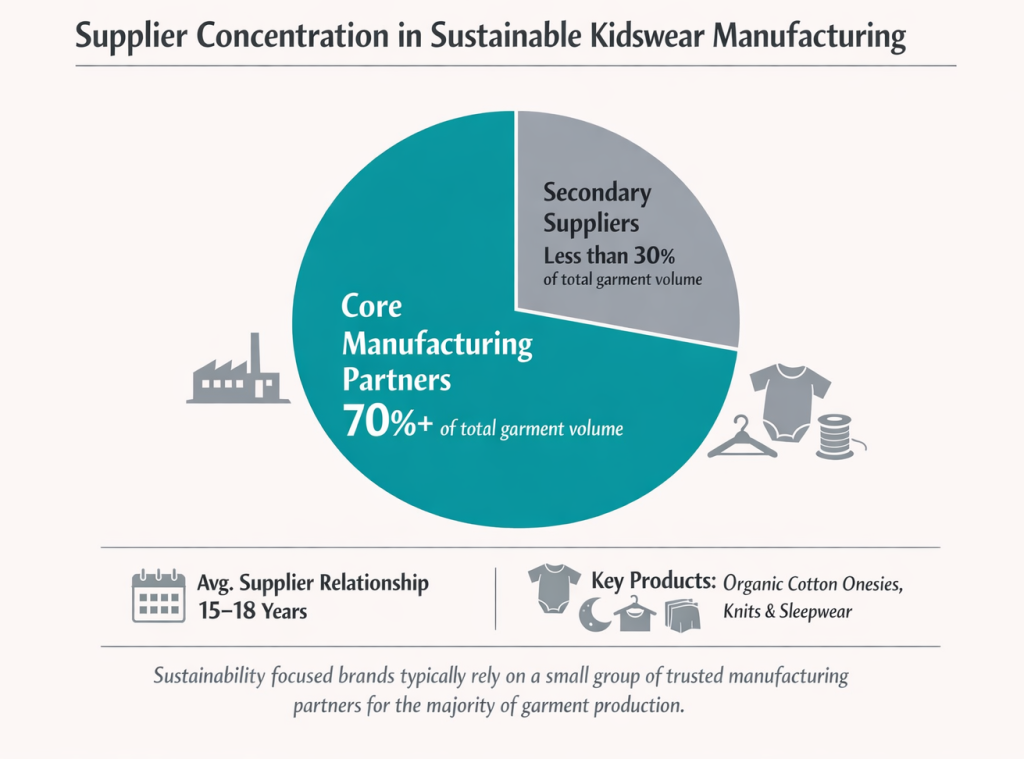
These suppliers support core categories, including organic cotton newborn onesies, bodysuits, knitted children’s wear, sleepwear, and babywear essentials.
As brands expand assortments and increase seasonal drops, they introduce additional suppliers to manage capacity and lead-time requirements for categories such as organic cotton onesies. This expansion often coincides with broader product diversification into accessories, footwear, and home textiles.
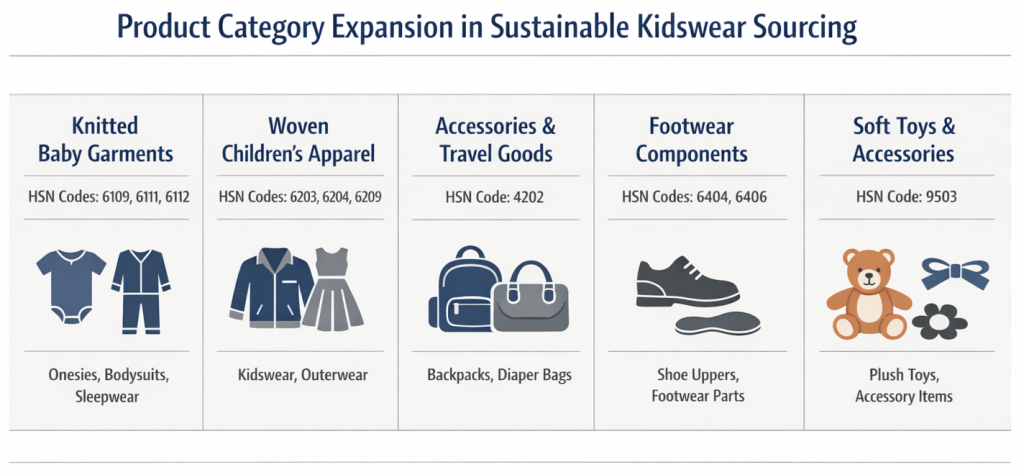
As product scope widens, brands encounter inconsistencies when they do not systematise supplier verification across categories. Secondary suppliers added for capacity or new product types frequently operate at different certification depths, increasing documentation and audit complexity.

Traceability pressure also increases sharply with shipment volume. While visibility at the cut-and-sew stage remains relatively strong, complexity rises upstream at spinning, dyeing and finishing stages. One sustainability-led children’s wear brand executed 796 individual shipments between January 2022 and September 2025.
Each of those shipments required complete certification documentation to satisfy organic, chemical safety, and social compliance requirements across destination markets. At this scale, manual transmitter systems become increasingly fragile.
This documentation burden is especially pronounced in repeat programmes for organic cotton newborn onesies. As sourcing footprints expand across India, Sri Lanka, Turkey, and other emerging regions, brands must manage overlapping audit regimes, including organic, recycled-content, chemical-safety, and social-compliance certifications.
Certification requirements specific to kidswear and babywear
Children’s apparel is subject to greater regulatory and reputational scrutiny than most adult fashion categories. Certifications in this segment function as enforceable operating requirements. Across popular sourcing models, the GOTS certification is treated as a mandatory eligibility criterion rather than a preference.
Brands explicitly restrict production to GOTS-certified factories, even when this limits short-term capacity expansion. As collections scale, additional certifications become operationally significant.
Chemical safety requirements add further complexity. Babywear and toddler garments must comply with lower tolerance thresholds for residual chemicals, increasing testing frequency across fabrics, trims, prints, and dyes. Brands producing bamboo and organic cotton blends face additional constraints due to the chemical intensity of viscose processing.
In one documented high-growth babywear sourcing model, more than 90% of total production volume was intentionally concentrated into two certified fabric constructions to maintain consistent OEKO-TEX® compliance and reduce testing variability as production scale increased.
3 sourcing pivots driving resilient, sustainable supply chains
As brands scale, sourcing strategies evolve to reduce risk and improve operational stability. Several strategic reorientations are consistently visible across the sourcing models reviewed.
1. There’s a deliberate move away from manufacturing in China for core children’s wear categories.
Brands cite certification control, geopolitical risk, and alignment with sustainability as primary drivers. China remains present in limited categories, but its role has reduced significantly in favour of diversified sourcing.
2. Brands increasingly treat India as a primary sourcing base for organic garments.
Sri Lanka, Turkey, and Portugal support complementary products such as outerwear and footwear, as well as near-shore replenishment. This multi-country approach allows brands to balance certification depth with lead-time flexibility.
3. Innovation programmes are being introduced to support sustainability at scale.
Examples documented include upcycling initiatives, capsule collections made from deadstock fabrics and recycled-fibre programmes designed to reduce material waste across seasons. These initiatives require suppliers with advanced material handling and documentation capabilities to remain compliant.
DPP, materials & factory-level ESG performance standards
Sustainability-first brands are also expanding material choices while tightening ESG controls. Across the sourcing models currently in use, there is a measurable increase in:
- Organic cotton and BCI cotton usage across knitted wear, denim, and woven childrenswear
- Recycled polyester and recycled polyamide in outerwear, rainwear, and technical garments
- Natural rubber compounds are used in children’s footwear soles to replace synthetic alternatives
- GRS-certified recycled fibres in accessories and homeware categories
Operational ESG initiatives at the factory level accompany these material changes. Documented efforts include reducing water consumption, wastewater treatment and reuse, energy efficiency programmes, and reducing abiotic resource depletion through the use of recycled input materials.
These measures are increasingly embedded into supplier selection criteria rather than treated as optional improvements. Indian apparel suppliers are also prepared for the mandatory EU Digital Product Passport (DPP) by 2027-2030.
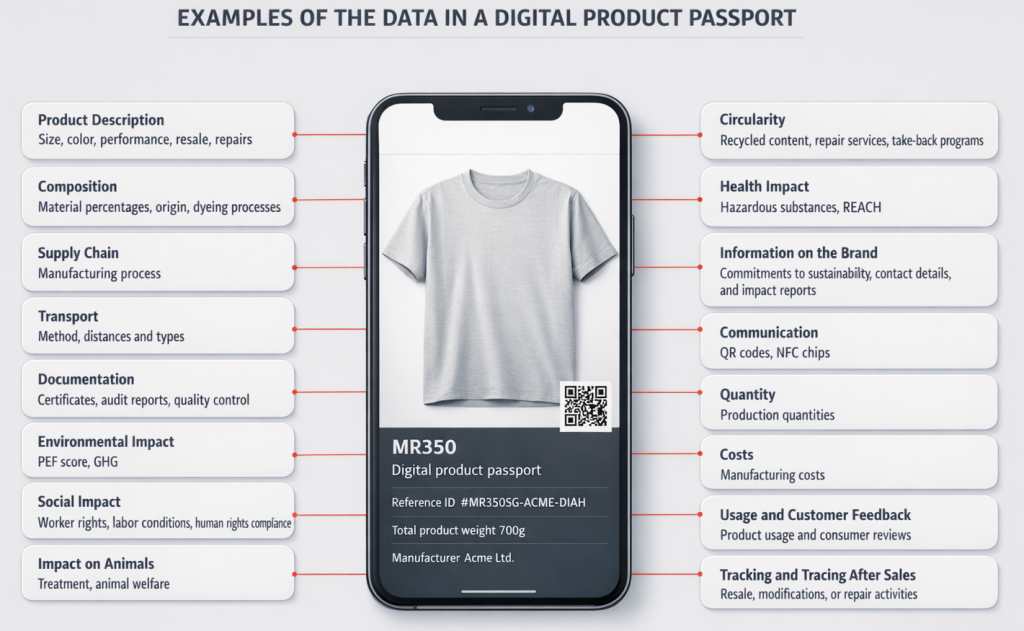
The DPP is a pivotal element of the EU’s sustainability strategy, derived from the EU Green Deal, and the Ecodesign for Sustainable Products Regulation (ESPR) came into effect on July 18th. Full implementation is expected by 2026 for products entering the EU market. Companies implementing the DPP system provide the following information about their products:
- Repair, refurbishment, recycling activities
- Better inventory management, supply chain streamlining, counterfeit identification
- Materials used and their origin
- Product’s technical information
- Products environmental impact throughout its lifecycle

Leveraging India’s certified manufacturing infrastructure for programme continuity
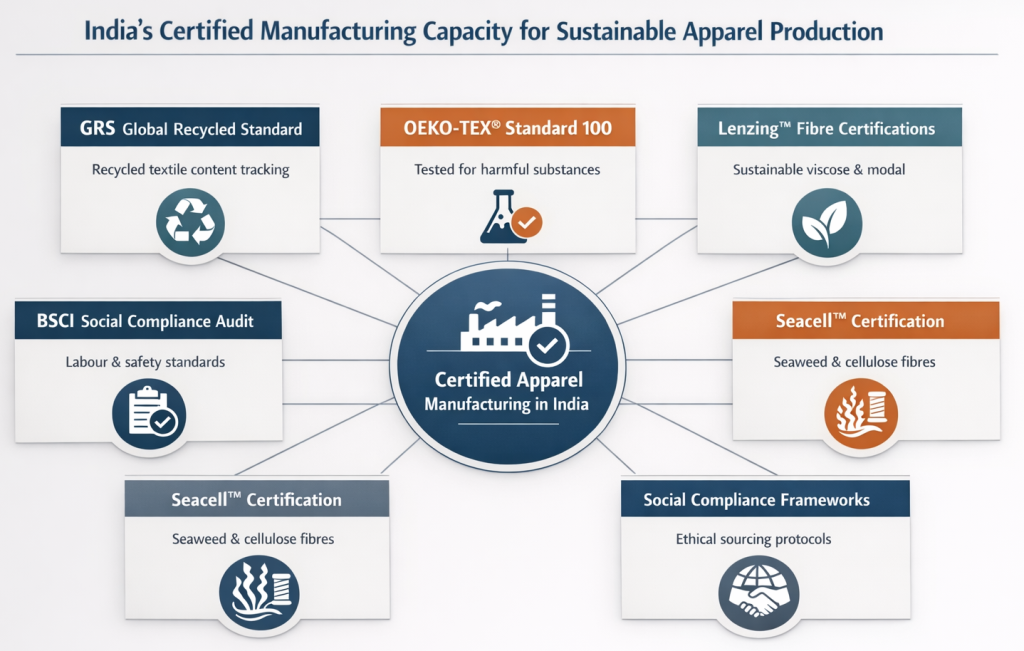
For sustainability-focused buyers in the UK and Europe, India functions as a stabilising sourcing base rather than a short-term alternative. Certification density enables factories to operate simultaneously under GRS, GOTS, Fairtrade, OEKO-TEX® and social compliance frameworks, reducing friction as brands expand their supplier bases.
Audit preparation capability is embedded into factory operations. Suppliers supporting sustainability-first brands are structured to handle repeated audits, corrective action plans, and buyer-specific reporting without disrupting production schedules. In one documented sourcing model, India-origin imports exceeded USD 1.6 million in a single year, reflecting sustained reliance on certified capacity rather than opportunistic sourcing.
1. Control in multi-category sourcing
Loss of control typically occurs during rapid growth phases, particularly when suppliers are added informally or documentation systems are fragmented. Brands that preserve control invest in pre-verified supplier networks, centralised certification tracking, and program-based sourcing models that apply consistent standards across seasons and categories.
2. Sustainability built into sourcing systems
An OECD survey found that over 80% of apparel brands and retailers require sustainability certifications not just to label finished products, but as operational mechanisms to manage supplier performance. They also require certifications to trace products or identify the origins of materials, such as cotton.
Embedding supplier verification, certification management, and compliance tracking into sourcing systems from the outset allows brands to increase production volumes and shipment frequency while maintaining consistent standards across diverse supply bases.
Closing perspectives
Sustainability-first kidswear brands are already operating ahead of broader market expectations. Their challenge lies in maintaining ethical standards as production volumes rise. When certified sourcing ecosystems are structured to support repeat programs, diversified product categories, and continuous compliance, growth can be achieved without weakening sustainability commitments.
For buyers across the United Kingdom and Europe, India enables this continuity when sourcing is approached through mature, verified, and compliance-ready supplier ecosystems.
Explore certified supplier networks built for repeat programs, not pilot collections.

Leave a Reply