Indian industrial product suppliers are winning global contracts by combining competitive pricing with consistent quality. Statistics reveal that global procurement teams are increasingly turning to India to source reliable pumps, precise valves, solid castings, and accurately machined parts from verified manufacturers that meet their standards and timelines.
This surge reflects growing confidence in industrial product suppliers from India, who merge their industrial product manufacturing skill with on-time delivery and compliance.
Buyers in the US, EU, GCC, and Australia are not simply purchasing products; they’re placing their trust in Indian suppliers to deliver on time and to specification. At this stage, reliability has become a greater differentiator than cost savings. For procurement teams managing production lines that depend on timely, high-quality components, dependable delivery outweighs lower prices.
Export numbers for 2024-25 back this up. The growth in Indian engineering goods comes not only from higher volumes, but from global buyers placing repeat contracts. Companies that deliver quality once are getting multi-year contracts and repeat business.
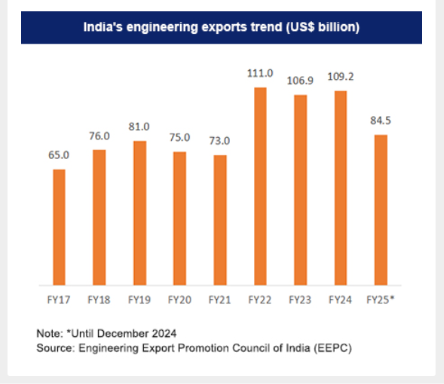
Engineering exports in FY24 constituted 25.22% of the overall exports from India. The numbers climbed to US$109.22 billion from US$106.93 billion in FY23. The momentum is building as more global buyers realize Indian suppliers can handle their requirements without the hurdles they’ve experienced elsewhere.
Leading Engineering Goods among India’s Exports
India’s engineering goods export numbers highlight the scale and maturity of India’s industrial product manufacturing ecosystem, supported by a strong base of verified industrial product suppliers.
They reflect trust built over the years, with global buyers worldwide are coming back for products that arrive on time and meet specifications consistently. A significant part of this momentum comes from the EPCG scheme under the Foreign Trade Policy.
Here’s how the exports break down across categories:
| Product Category | Export Value (US$ Million) | Share of Total (%) | Trend |
|---|---|---|---|
| Capital Goods | ~42,225 | ~50% | Buyers in Europe and GCC keep returning for reliable deliveries. |
| Iron, Steel & Products | 14,410 | 17.07% | Slight dip (-8.68%) but remains a core export pillar. |
| Non-Ferrous Metals & Products | 8,330 | 10.52% | Aluminium products lead at US$5,165 million (-3.53%). |
| Industrial Machinery | 14,772 | 17.44% | Growing demand from Middle East buyers for specialized equipment. |
| Electrical Machinery | 10,593 | 12.54% | Consistent repeat orders from US and EU buyers. |
| Auto & Auto Parts | 15,120 | 17.95% | High-volume orders driving long-term partnerships. |
| Miscellaneous (Aircraft, Ships, etc.) | 20,669 | 24.49% | Specialized, high-value products increasingly sought after. |
Emerging Products on the Rise
Global buyers are showing strong demand for industrial machinery and auto parts, driven by their precision and adherence to compliance with global standards. Electrical machinery exports are also on the rise, supported by the growth of renewable energy initiatives and automation projects worldwide.
Key Product Categories Driving Demand
We’ll take a look at the key engineering product categories exported from India.
Pumps, Valves, and Flanges
Industrial pumps, valves, and flanges from India are landing major contracts in oil & gas, water treatment, and power projects worldwide. Buyers care most about getting parts that work reliably, and Indian suppliers are proving they can deliver exactly what’s ordered without surprises. This is where India’s industrial product manufacturing expertise stands out.
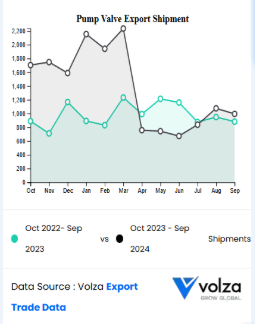
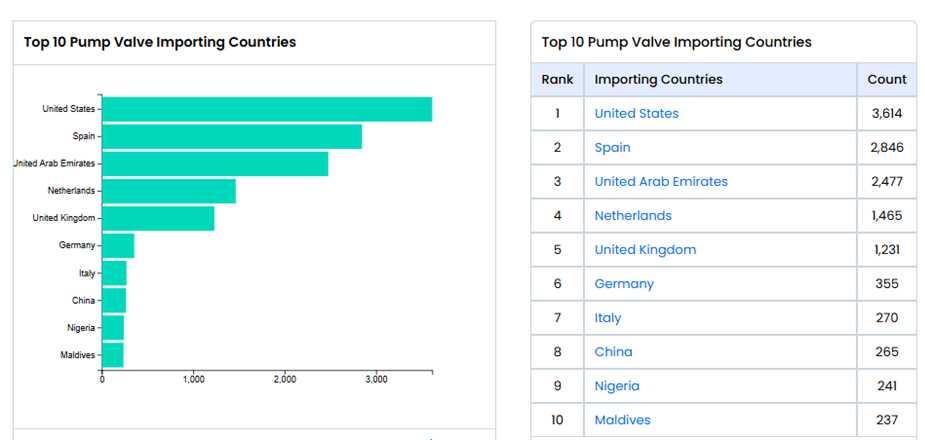
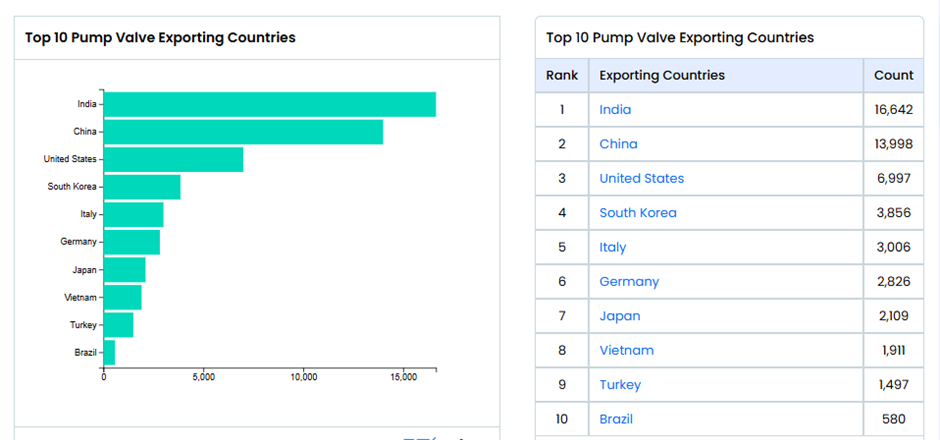
Between October 2023 and September 2024, India exported 16,000 pump valve shipments to 117 countries, with the US, Spain, and the UAE ranking as the top destinations. Repeat demand from these markets reflects the ability of Indian suppliers to deliver consistent quality on schedule.
They manage both large-scale contracts and customised requirements effectively, and for smaller exporters in particular, reliability has become a key factor when it comes to winning and retaining business.
Castings, Forgings, Machining Components
These are vital engineering components in industries like automotive, aerospace, and heavy machinery. SMEs in India export custom parts from technical drawings. These suppliers handle small quantities and keep the momentum running with timely shipments.
Specialized Components
High-pressure fittings, precision spare parts, and other specialty items are sourced by buyers who can’t risk component failures. Indian suppliers handle these demanding requirements by knowing their technical specifications and staying flexible with their operations.
Key Global Markets Driving Demand for Indian Engineering Goods
Here’s a breakdown of the global exports market for engineering goods from India.
GCC (Saudi Arabia, UAE, Qatar)
Indian suppliers are landing big contracts in the GCC because they actually follow local rules and deliver what they promise. GCC buyers prioritize suppliers who comply with SASO and ICV requirements. For Indian exporters who meet these standards while delivering on time, the result is repeat contracts and a stronger market presence.
Suppliers who figure out these regulations and still deliver quality parts on time get repeat business and long-term contracts. GCC buyers don’t just want someone to ship parts. They want industrial product suppliers who understand their project deadlines and compliance needs.
US and EU
The demand for precision engineering components among US and European procurement managers remains consistently high. These teams have been sourcing aerospace parts, precision castings, and specialized machined components from India. Certifications like ISO 9001, CE, and AS9100 are mandatory for such exports.
Indian suppliers who have both the engineering skills and the right certifications are no longer seen only as a cost advantage, but as a trusted partner capable of managing critical, high-value orders. These factors make engineering products suppliers credible sourcing partners for critical industries.
Australia and Emerging Markets
Australia and other growing markets are buying heavy machinery components, custom forgings, and specialized engineering solutions from India.
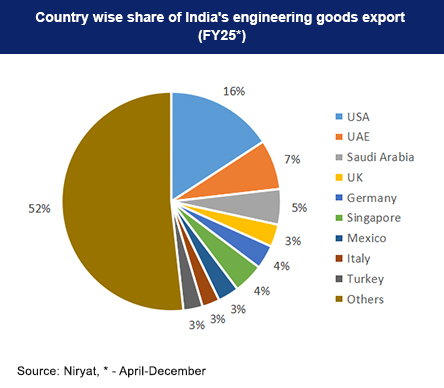
In all these markets, procurement teams look for trusted suppliers who value quality. Indian suppliers are adaptable as specifications often change, and they ensure compliance with the established standards.
India’s Competitive Advantage
Indian industrial product suppliers figured out how to keep prices competitive with China and Europe without cutting corners on quality. Many can handle small custom orders based on specific designs, which gives buyers flexibility for specialized projects instead of forcing them into huge minimum orders.
Procurement teams dealing with multiple suppliers like this flexibility. They get reasonable pricing and the ability to order exactly what they need.
Compliance and Quality
Global buyers are no longer satisfied with quotes alone; they expect documented proof of quality assurance. Certifications such as ISO 9001, CE, and AS9100 have become baseline requirements for securing high-value contracts from global brands and procurement professionals.
Many SME suppliers available for business on rivexa’s network have passed audits and can deliver parts, spares, and components that meet strict inspection standards. Certifications strengthen the position of industrial product suppliers in the global procurement ecosystems.
Strong Supply Base
India’s engineering sector has depth and variety. Experienced MSMEs in hubs such as Coimbatore and Pune, alongside larger operations in Gujarat, form a nationwide supply base. These manufacturers collaborate to ensure industrial product manufacturing runs smoothly and buyer requirements are met without disruptions.
How rivexa Connects Global Demand with Indian Suppliers
Indian engineering goods possess a unique value proposition: competitive pricing, reliable delivery, and quality aligned with international standards. As a result, more procurement teams are sourcing from Indian suppliers owing to demonstrated compliance and consistency.
Yet identifying the right Indian supplier in such a vast ecosystem remains a challenge. Procurement teams need more than quotes; they are also looking at other factors like certifications, verifications supported by recognised authorities, and proven delivery records. This is where a structured sourcing approach becomes essential.
rivexa streamlines procurement by connecting global buyers directly with verified Indian industrial product suppliers who are certified, audited, and aligned with realistic lead times. This strengthens industrial product manufacturing visibility, reduces sourcing risk, and helps procurement teams to build long-term partnerships with confidence.

Leave a Reply