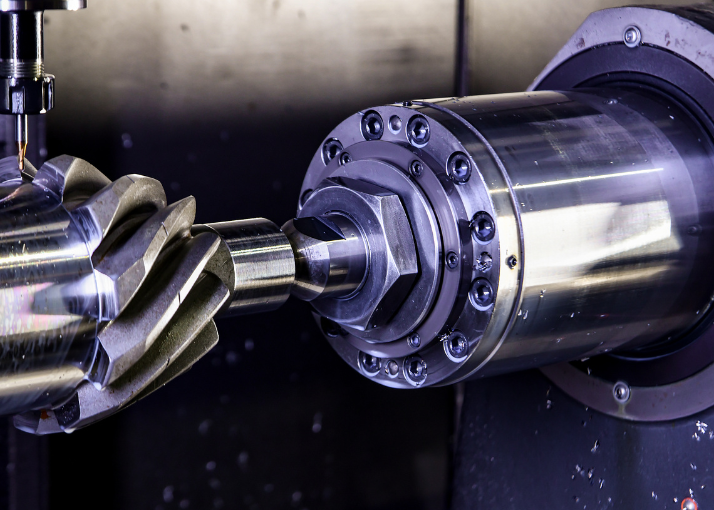
Precision machining is more than a technical process; it is what keeps modern engineering supply chains running without disruption. When a pump valve, impeller, or other industrial spare is off specification, the cost can be enormous. That is why global procurement teams now look for manufacturing partners who can deliver not just precision, but repeatability and compliance.
In India, this often means suppliers proficient in precision CNC machining or precision investment casting, capable of delivering intricate geometries with repeatable accuracy. Whether it’s high-precision manufacturing or multi-axis CNC machining, Indian suppliers now blend engineering expertise with reliability, qualities once associated with leading European or American producers.
This is where Indian SMEs are stepping up. By investing in multi-axis CNC systems, mastering exotic materials, and aligning with global quality standards, they have moved from local suppliers to trusted, verified participants in the international supply chain. Their ability to balance scale with accuracy is exactly what global buyers need in today’s environment of tight deadlines, superb quality, and zero error margins.
With sourcing marketplaces like rivexa, this capability is now easier to access. Instead of navigating endless supplier lists, procurement teams can connect directly with vetted Indian manufacturers who combine precision with dependability. For global buyers, it shifts sourcing from a risky search to a reliable partnership that supports long-term growth.
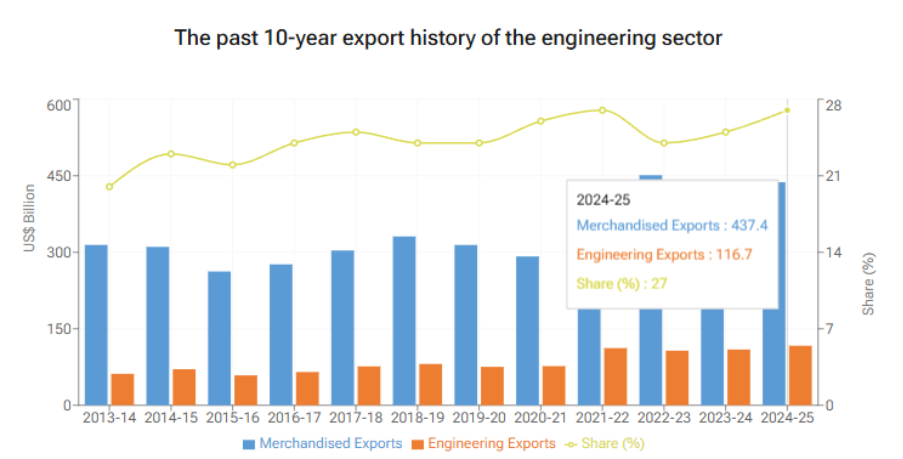
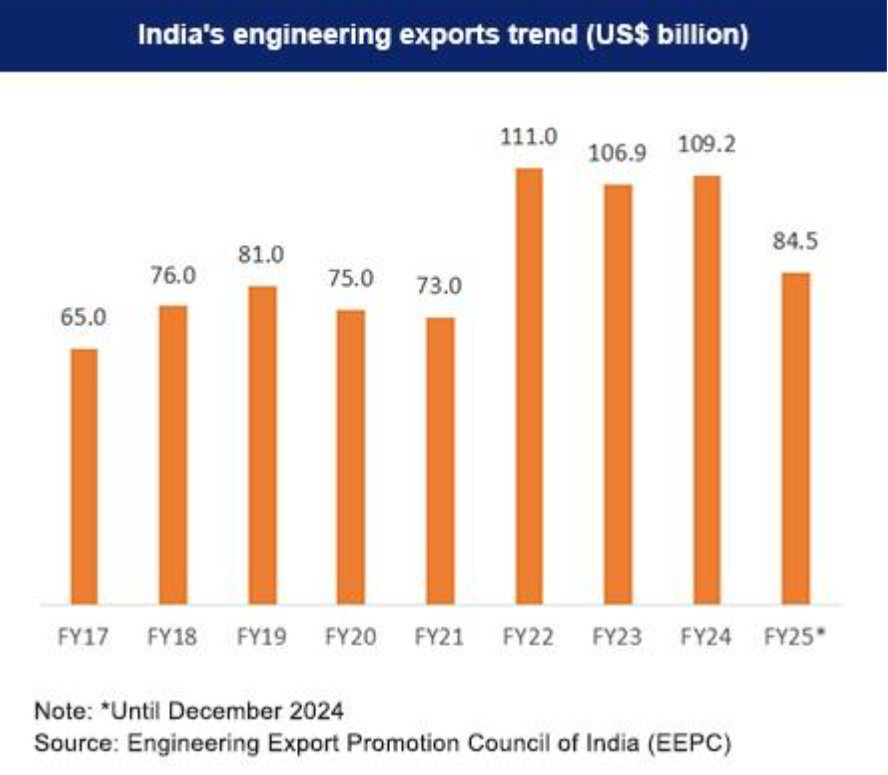
The graph shows that engineering exports from India reached a historical high of USD 116.67 billion in 2024-25.
Which Industries Are Highly Dependent on Precision Machining?
Automotive
Automotive OEMs know their crankshafts, camshafts, and transmission parts undergo serious wear and tear. Heat, stress, and millions of cycles – these components need to perform without breaking down. Indian suppliers have really stepped up here, landing long-term contracts by demonstrating they can manufacture parts that cut down on warranty claims and keep vehicles running smoothly between maintenance cycles.
Oil & Gas
Oil and gas operations are brutal on equipment. Valves and pumps deal with crushing pressures and harsh chemicals every day. Getting the machining right means avoiding costly shutdowns and emergency repairs. Several Indian SMEs have built strong reputations in this space by delivering components that actually survive these harsh conditions – something procurement teams pay good money for.
Aerospace
Turbine blades and landing gear components simply can’t fail. Indian SMEs have established their track record by consistently hitting the tight tolerances these projects require. They’ve built solid partnerships with international aerospace companies, proving they can deliver reliable components that fit right into complex assemblies without inviting trouble down the line.
India’s Capabilities in Precision Machining
Indian SMEs aren’t just producing parts locally. They’re stepping onto the global stage, turning their precision manufacturing capabilities, including precision CNC machining or precision investment casting, into tangible value for international buyers and integrating seamlessly into high-tech supply chains.
Multi-Axis CNC Expertise
Indian SMEs are heavily investing in 5-axis CNC equipment that was previously exclusive to Tier 1 manufacturers. The speed of this transition has been remarkable. Their shift toward high-precision CNC machining has positioned them among the most advanced suppliers in Asia. This evolution has positioned them as credible partners for precision CNC machining projects that demand higher tolerances and multi-axis control.
Handling Exotic Materials
Inconel, titanium, and PTFE are among the most demanding materials in precision machining. They cause rapid tool wear, generate excessive heat, or deform easily if not handled with the right equipment and expertise. These are key reasons why many machine shops avoid them altogether.
However, best-performing SMEs now combine precision manufacturing expertise with precision investment casting methods to produce durable, high-performance components that meet global standards.
This combination of precision metal casting and advanced manufacturing enables them to handle challenging materials without compromising on accuracy or strength.
Today, several are successfully machining valve bodies for offshore oil platforms and critical aerospace components, where reliability under extreme conditions is non-negotiable. For global buyers, this capability ties into tapping suppliers who deliver high-value components with proven consistency and margins.
Quality and Compliance
Gujarat’s manufacturing clusters house precision machining shops equipped with certified metrology equipment like CMMS, gauges, and calibrated instruments on par with global standards. These are not budget alternatives, but advanced tools ensuring every dimension is verified. For export-focused suppliers, quality lapses are not an option: a single defect can trigger costly recalls or halt production lines.
Such quality frameworks are especially critical for precision CNC machining applications, where micron-level tolerances determine whether a component passes or fails inspection.
That is why ISO, ASTM, or DIN compliance has become a standard practice. Local manufacturers have upgraded their processes, accordingly, positioning themselves as credible partners for the world’s most demanding markets.
Export-Ready Manufacturing
Indian SMEs and Tier 1 suppliers contribute critical components. Indian manufacturers today supply components that go directly into John Deere equipment (with manufacturing operations located in Pune) and Airbus aircrafts (including aerostructures, composites from Indian firms like Aequs, Dynamatic Technologies, TATA Advanced Systems).
Today, the world’s leading OEMs are conducting facility audits in hubs Chennai and Bangalore before awarding contracts to qualified suppliers.
With quality standards matching international benchmarks (AS9100 for aerospace, IATF 16949 for automotive, ISO 13485 for medical) while costs are still lower than in Western countries, the sourcing case has become clear and compelling for buyers.
How Precision Machining Makes Indian Suppliers Indispensable
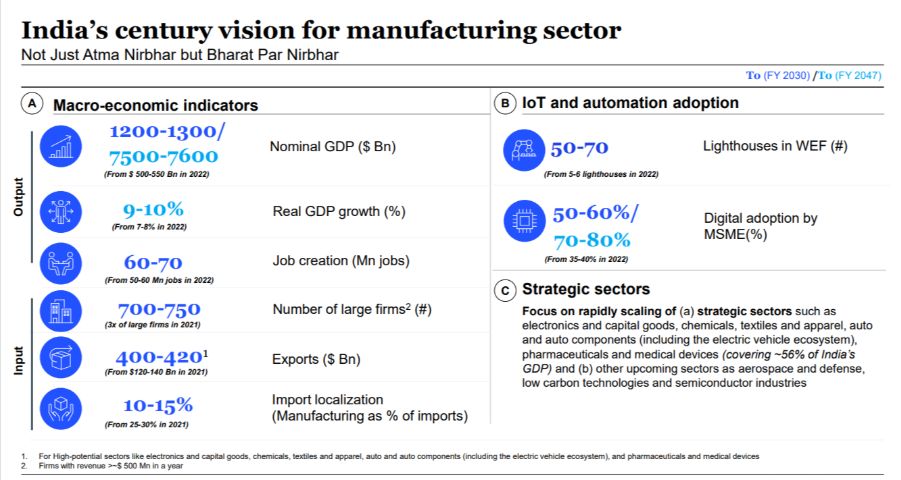
Manufacturing contributed 17.4% to India’s GDP in FY 2020, up from 15.3% in 2000. As Indian SMEs continue to refine these capabilities, the next question for global buyers becomes clear: why is precision machining such a deciding factor when choosing suppliers?
Precision machining doesn’t just produce parts, it creates value. Raw materials are transformed into components that go straight into complex assemblies, whether it’s a turbine blade in an aircraft, an engine part in a high-performance car, or a surgical implant in a hospital. These are components that global buyers cannot afford to see fail in the field.
Keeping Supply Chains Lean
Overseas buyers lose sleep over one thing: parts showing up late or failing in the field. Indian suppliers have figured out how to calm those nerves. Large production runs stay consistent – batch 1 machines the same as batch 100. Procurement teams who started with pilot orders are now placing annual contracts. That’s how you build real partnerships.
India’s Strategic Edge in Global Sourcing
The conversation has shifted completely. Five years back, buyers came to India purely for cost reduction. Now they’re sourcing here because these shops deliver quality that matches European standards while hitting deadlines consistently. A medical device company will split orders between German and Indian suppliers for the same components. This speaks volumes about where Indian manufacturing stands today.
Conclusion
Buyers today expect flexibility without compromise: suppliers who can scale volumes while maintaining strict standards. Speed matter too; sample approvals in days, not weeks, can decide a product’s success.
Traditionally, finding such suppliers meant trade shows, cold calls, scouting through referrals and long vetting cycles. rivexa changes that equation by connecting global buyers directly with pre-verified Indian suppliers who already meet international benchmarks.
Here’s the bottom line: precision manufacturing, from precision CNC machining to precision investment casting, saves money through fewer rejected parts, lower warranty costs, and minimal downtime. For Indian SMEs, registering online on rivexa isn’t just marketing. It’s access to global buyers who value advanced manufacturing and precision engineering excellence.
With rivexa, that trust is built-in. Every partnership connects buyers with verified Indian manufacturers reducing risk and driving long-term sourcing growth.
Need precision partners for pumps, valves, or machined parts? Talk to our industrial goods team here.

Leave a Reply