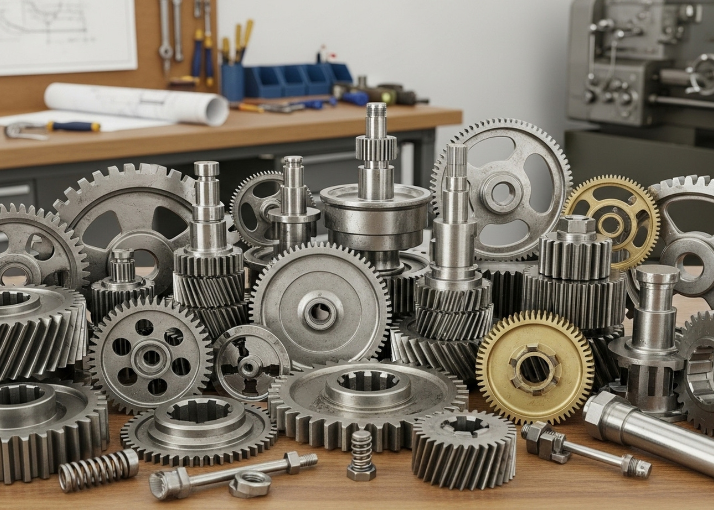
The GCC’s industrial programmes are driving urgent demand for custom-manufactured components across automotive, steel, energy systems, water infrastructure, and heavy engineering. With the IMF projecting 4.4% economic growth in the GCC by 2026, the region is entering a historic infrastructure surge (GCC Economics Outlook for 2026).
Programmes like Saudi Arabia’s National Industrial Strategy (targeting a SAR 895bn manufacturing GDP by 2030) and the UAE’s Operation 300bn are active procurement drivers. In 2025 alone, the region awarded over USD 250 billion in project contracts (Outlook & Opportunities in GCC Projects), with significant demand for water desalination components and renewable energy equipment.
In the first half of FY2025-26, engineering goods continue to dominate, accounting for nearly 25% of India’s total merchandise exports, with a significant year-on-year growth in industrial machinery and automotive components. These numbers reflect deep capabilities in precision machining, casting, forging, and assembly, as well as export-ready quality systems (EEPC).
India’s key strengths in engineering component sourcing
1. High-mix, low-volume engineering
Indian manufacturing clusters are well-suited to small- to medium-sized production runs that require tight tolerances and frequent design iterations. This is ideal for retrofit projects, specialised OEM parts and custom machine components (IBEF).
2. Broad category depth
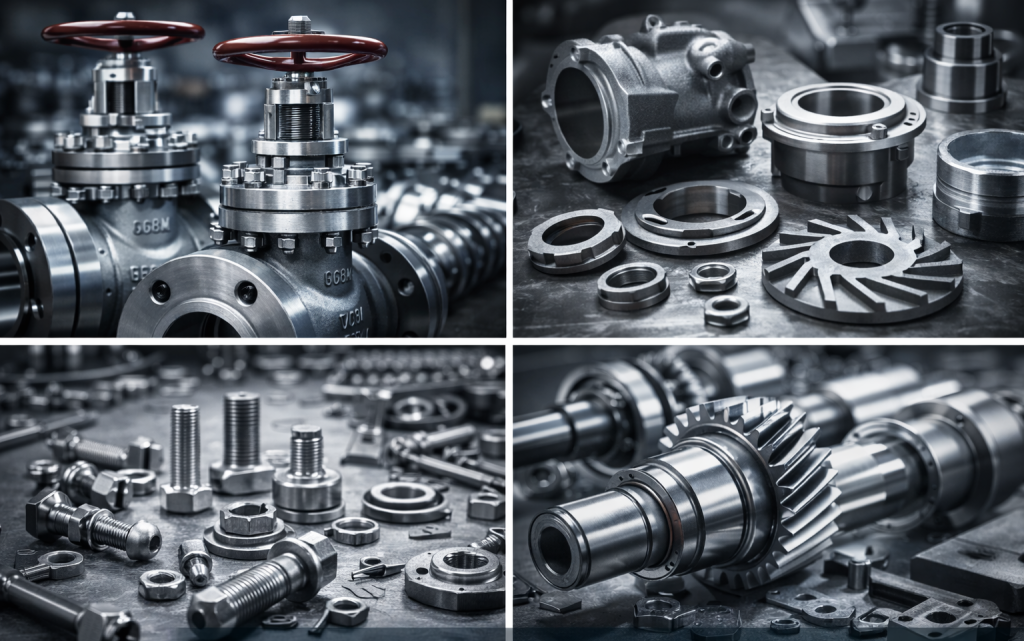
India supplies automotive components, pumps and valves, ferrous and non-ferrous castings, forged parts, and fabricated assemblies used in process, power, water, and desalination projects (IBEF, OEC World).
3. Supply chain familiarity with global OEMs
Many exporters in India already operate inside global automotive and industrial supply chains and adopt OEM-aligned quality and document control practices. This reduces ramp-up friction for GCC buyers (ACMA).
4. Improving trade economics
Trade frameworks, such as the India-UAE CEPA, have removed or reduced duties on most tariff lines, making landed costs more competitive for UAE importers. CEPA also eases customs formalities for many engineering goods (Indian Trade Portal, MOET).
5. Logistical proximity
Regular sea freight lanes from India’s west coast to GCC hubs, along with short transit windows for many routes, support predictable project timelines. Typical container transit from Mumbai (Nhava Sheva) to Jebel Ali is often quoted at 14 to 16 days, depending on the service (Sea Rates).
Key considerations when sourcing engineering components :
1. Supplier selection and trust
Finding suppliers that meet complex tolerances, certifications, and documentation standards takes time, and there is usually no simple way to verify compliance.
2. Quality assurance across runs
Maintaining dimensional accuracy, material traceability, surface finish, and repeatability can be hard when switching suppliers or when parts require multiple processes.
3. IP and drawing protection
Sharing proprietary drawings raises concerns around confidentiality, revision control, and auditability. Buyers need process discipline and contractual protection.
4. Schedule and communication gaps
Time zones, language differences, and dislocated production monitoring cause coordination overhead and missed milestones.
5. Paperwork and compliance
Export documentation, certificates of origin, and preferential tariff claim processes add administrative load and can delay clearance if not handled correctly.
Practical steps for GCC buyers to reduce risk
1. Verify capability by process, not just product
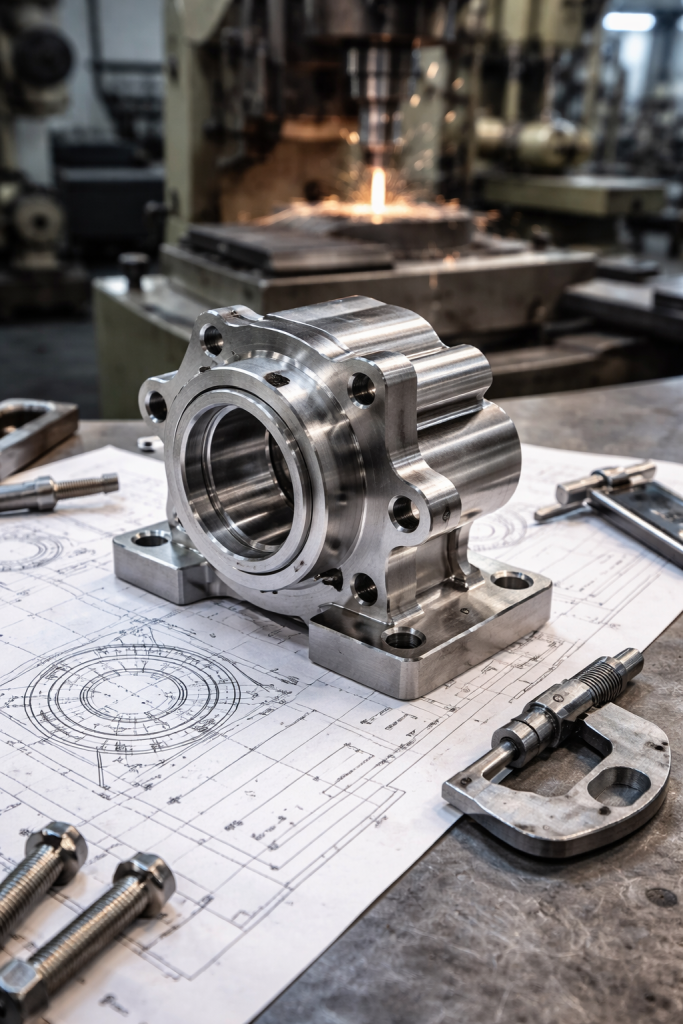
Ask for evidence of CNC programmes, jig or fixture capability, heat-treatment records, and first article inspection reports rather than generic capacity claims.
2. Require documented control
Insist that suppliers maintain drawing revision histories and sign off on approved production releases. This reduces rework and prevents production on obsolete designs.
3. Verify certifications and audits
Target suppliers with ISO 9001 and, where relevant, IATF 16949 for automotive or industry-specific accreditations. These show system-level process discipline (URSINDIA).
4. Use NDAs and controlled data exchange
Make NDAs and restricted access to CAD files standard in RFQs for proprietary parts. Many export-focused Indian suppliers already operate under NDAs as part of OEM supply chain practice (ACMA, EEPC).
5. Plan logistics early
Book shipping slots and clearance paperwork against milestone dates. Use port-of-origin visibility and preferred carrier lanes to guard against seasonal congestion (SeaRates).
How digital marketplaces and structured sourcing help
Given India’s large and distributed manufacturing base, a structured sourcing layer helps convert macro capability into project-level certainty. Digital sourcing platforms and managed marketplaces standardise manual procurement into efficient workflows for drawing-based RFQs, supplier shortlisting, sample coordination and quality checks. For GCC buyers, this centralisation reduces search time and administrative effort while increasing overall transparency.
Drawing from India’s vast engineering exports and history of OEM participation, many Indian manufacturers are highly experienced in drawing-driven work. To succeed, buyers should choose partners that offer verified supplier capabilities, on-ground quality control, and coordinated logistics (EEPC, IBEF).
rivexa: the better way to access India’s engineering ecosystem
For GCC buyers who see value in India’s custom manufacturing expertise, rivexa provides structured access to verified, export-ready manufacturers. This one-stop digital platform streamlines procurement through drawing-based engagement and coordinated execution. By managing the process from prototyping to production, rivexa ensures that working with Indian industrial suppliers is predictable and organised.

Leave a Reply