
Procurement heads across Oceania continue to navigate sourcing challenges, including manufacturer risk management, manufacturer credibility, long lead times, and rising compliance costs, all of which strain efficiency and agility. However, this dynamic is rapidly shifting as more procurement teams are choosing to import Indian products for scalable, flexible supply solutions.
As trade frameworks evolve and digital sourcing matures, India is fast becoming a preferred partner for diversified procurement. While commodity-based trade once defined India’s exports, apparel, home textiles, and light-engineering goods now drive the country’s export growth.
Why global buyers are acting now
Indian manufacturers are no longer just commodity exporters; they’re building reputations for innovation, reliability, and scale across multiple product categories. With global supply routes still recalibrating post-tariff disruptions and sustainability compliance tightening, buyers across Oceania are looking to India for both resilience and visibility.

India’s mainstay engineering goods exports increased from USD 46.52 billion in April-August 2025 to USD 49.24 billion in April-August with a 5.86% rise as shown above.
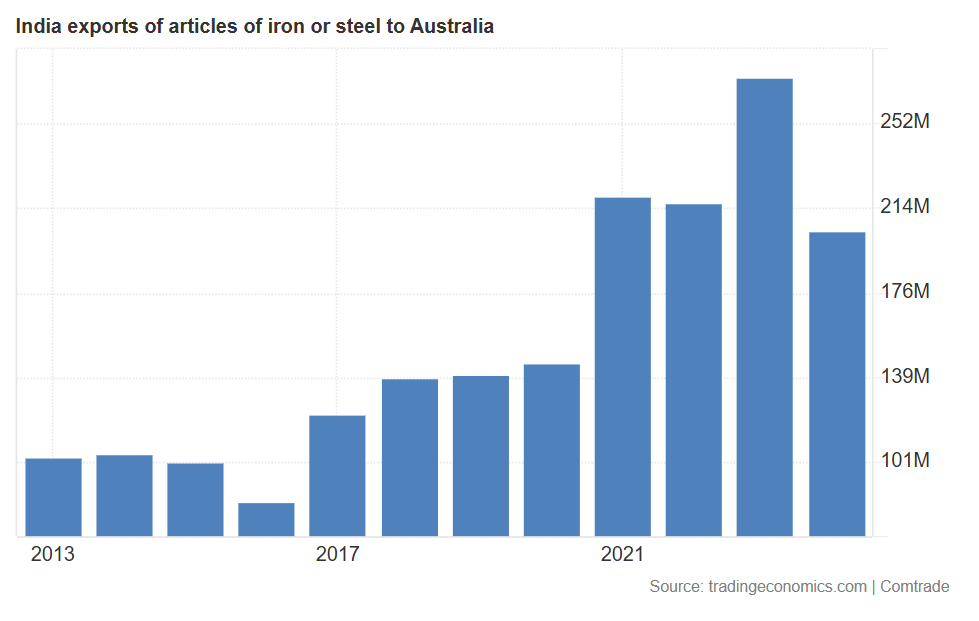
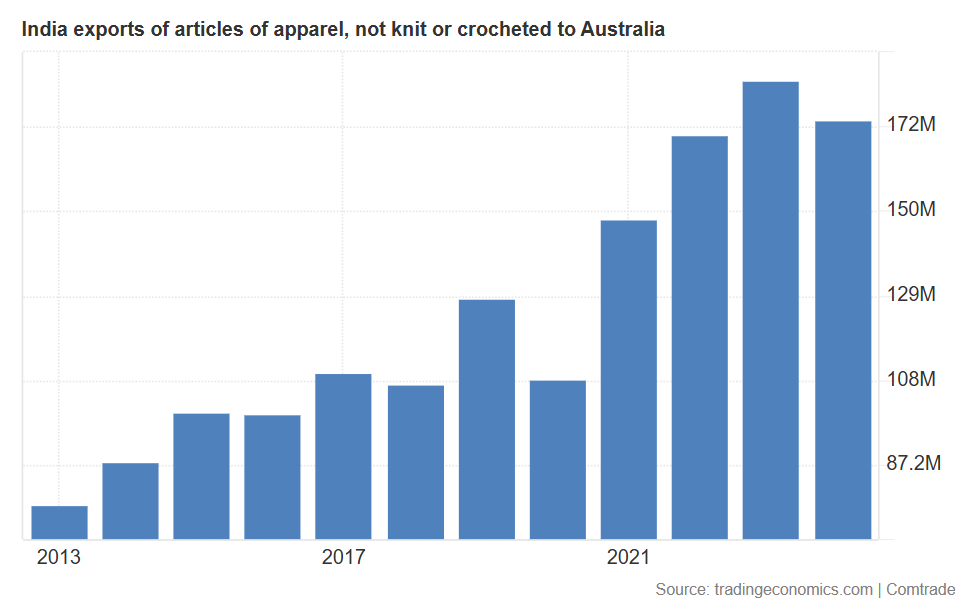
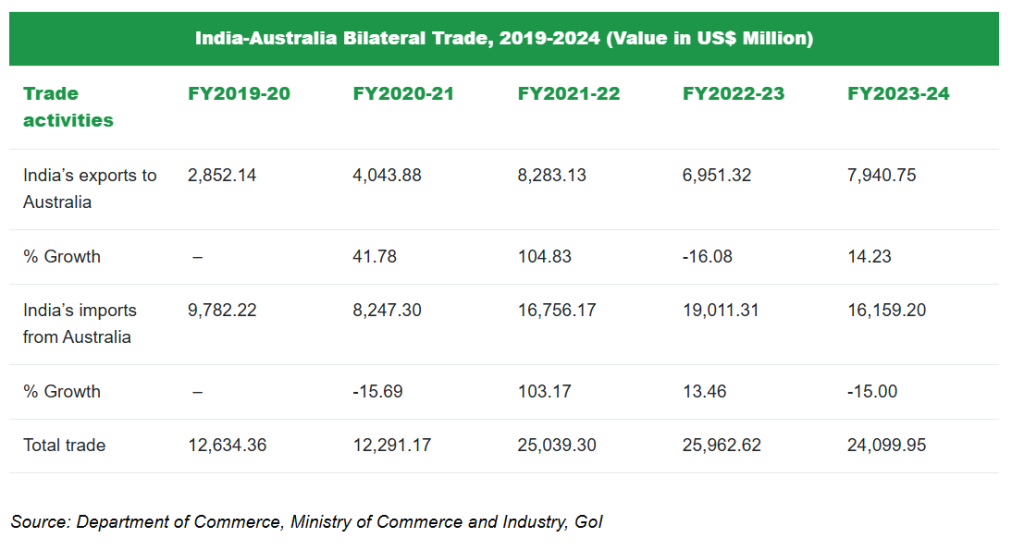
India’s exports to Australia surged to USD 7.74 billion in 2025, up 14% year-on-year, supported by a 7.7% increase in non-petroleum manufacturing exports. This upward trend follows the India-Australia ECTA and reflects a growing preference for Indian manufacturers capable of meeting international ESG and compliance standards.
Manufacturers that export Indian engineering products are redefining responsiveness, offering flexible MOQs, faster quoting cycles, and structured digital processes that minimise sourcing friction.
As a result, procurement teams in the Oceania region are discovering a more agile, flexible, and responsive manufacturing base that supports supply chain resilience, with their sight set on India as a compelling choice.
India’s growing role in Oceania supply chains
As procurement leaders across Australia and New Zealand seek resilient tariff-free supply networks, Indian manufacturers of industrial parts are delivering measurable results through compliance maturity and flexible capacity.
The shift isn’t just about cost. It’s about supply reliability, compliance maturity, and India’s proven ability to meet evolving procurement demands across categories. Industrial component manufacturers that export Indian products have gained more visibility across global supply chains.
Procurement teams in Oceania are particularly drawn to India for its growing manufacturer credibility, speed, and evolving compliance frameworks. Below are the key drivers behind India’s growth trajectory.
1. India is diversifying its exports
India’s export portfolio now spans engineering goods, textiles, and home textiles, with apparel leading the surge in exports to Australia. This aligns with post-ECTA trade reforms, which have streamlined customs procedures and enhanced bilateral transparency between India and Australia.
With the India-Australia ECTA eliminating tariffs on 96% of Indian imports into Australia, the path to land cost-competitive goods is faster. Trade portals and export playbooks increasingly spotlight these categories as priority growth bets for Australia-bound sourcing, reflecting real demand on the ground.
2. Flexible MOQs and faster quotes
Several India-based manufacturers have adopted AI-assisted quoting systems and digital order management tools to streamline fulfilment across different countries. These tools also provide the proof global procurement teams need to benchmark manufacturers faster and negotiate with real-time visibility into production capacity.
For procurement heads, these digital workflows reduce dependency on intermediaries and create audit trails that strengthen compliance oversight. Indian factories are increasingly adapting to buyer needs with smaller production runs, quick sampling, and efficient digital communication. Structured digital RFx processes and standardised quoting formats have reduced turnaround times from weeks to as little as 12 to 24 hours.
Manufacturing hubs such as Tiruppur, Tamil Nadu, and Gujarat now offer flexible production capacity, allowing buyers to scale up or down without compromising quality or timelines. The net effect: procurement teams enjoy the greater agility they’ve been looking for, backed by performance data, without taking extra risk.
How to import from India with flexible MOQs
This simple scenario highlights how India’s industrial manufacturing exports help streamline supply chains for Oceania buyers. This scenario illustrates how sourcing through verified Indian industrial component manufacturers can deliver greater agility and financial control for Oceania procurement teams.
1. Smaller runs, real agility
Indian factories now accept flexible MOQs for specialised or test programs, letting buyers validate new styles or markets without committing to 5000+ unit minimums.
2. Faster quoting with digital RFx
Digital RFx templates and structured cost breakdowns cut quote turnaround to hours, making comparisons transparent and efficient.
3. Optimised cash flow management
Smaller orders mean reduced inventory risk, quicker restocks, and better cash utilisation, which is a critical factor for procurement teams balancing global operations.
This approach gives procurement teams measurable control over spend, cycle time, and manufacturer performance, which are critical parameters in strategic sourcing reviews.
Implementation tips and pitfalls
When sourcing from manufacturers that export Indian products, planning and process control are essential for consistent results. To maintain reliability as sourcing from India scales, procurement teams should build structured engagement and review frameworks.
Plan realistic lead times
- Secure trims, labels, and packaging early to prevent delays due to substitution.
- For repeat programs, stock undyed (greige) fabrics or pre‑book core fabrics to reduce dyeing lead time and avoid seasonal disruptions.
Tighten specification packs
- Provide complete BOMs, tolerance bands, wash standards, and other testing standards at the sampling stage.
- Share testing protocols covering shrinkage, colourfastness, and pilling, before production starts.
De‑risk the ramp
- Pilot batches of 100 to 300 units can validate fit, durability, and compliance before full production.
- Approve PPS and freeze final specifications to prevent drift.
Protect logistics windows
- Always allow buffer days for customs clearance and consider multi-route shipping to avoid single-lane risks.
- Split shipments for initial orders to prevent full exposure on a single route.
Commercial alignment
- Ensure full landed-cost visibility, including compliance, freight, and documentation, before contract sign-off.
- Request a landed‑cost breakdown that includes FOB, testing, compliance, and logistics.
- Align payments to milestones, such as midline QA pass and pre‑shipment inspection.
Performance loop
- Add KPI context, such as OTIF performance, CAPA adherence, and responsiveness, to benchmark against manufacturer reliability.
- Maintain backup vendors for core SKUs to ensure supply continuity if demand spikes or a line slips.
A direct path to India’s verified manufacturing network
Flexible MOQs and fast, structured quotes give procurement teams tangible advantages, such as shorter cycles, leaner inventory, and predictable landed costs, without compromising quality. If you’re assessing India as a sourcing base, start small.
Start your India sourcing journey with a pilot order through rivexa today. Upload your tech pack for a key SKU, receive quotes from verified manufacturers within 12–24 hours, and validate manufacturer performance through a controlled trial.
rivexa’s verification approach ensures that every component manufacturer registered on its marketplace meets international audit norms and compliance documentation before onboarding, eliminating procurement guesswork.
rivexa, the digital sourcing marketplace, connects Oceania-based procurement teams with verified Indian industrial component manufacturers. By managing manufacturer verification, documentation, and compliance checks, rivexa enables buyers to export Indian products efficiently, with transparent timelines and reduced risk.
Connect with rivexa’s verified industrial component manufacturers and experience India sourcing built on speed, flexibility, and compliance. Find our sourcing specialists here.

Leave a Reply