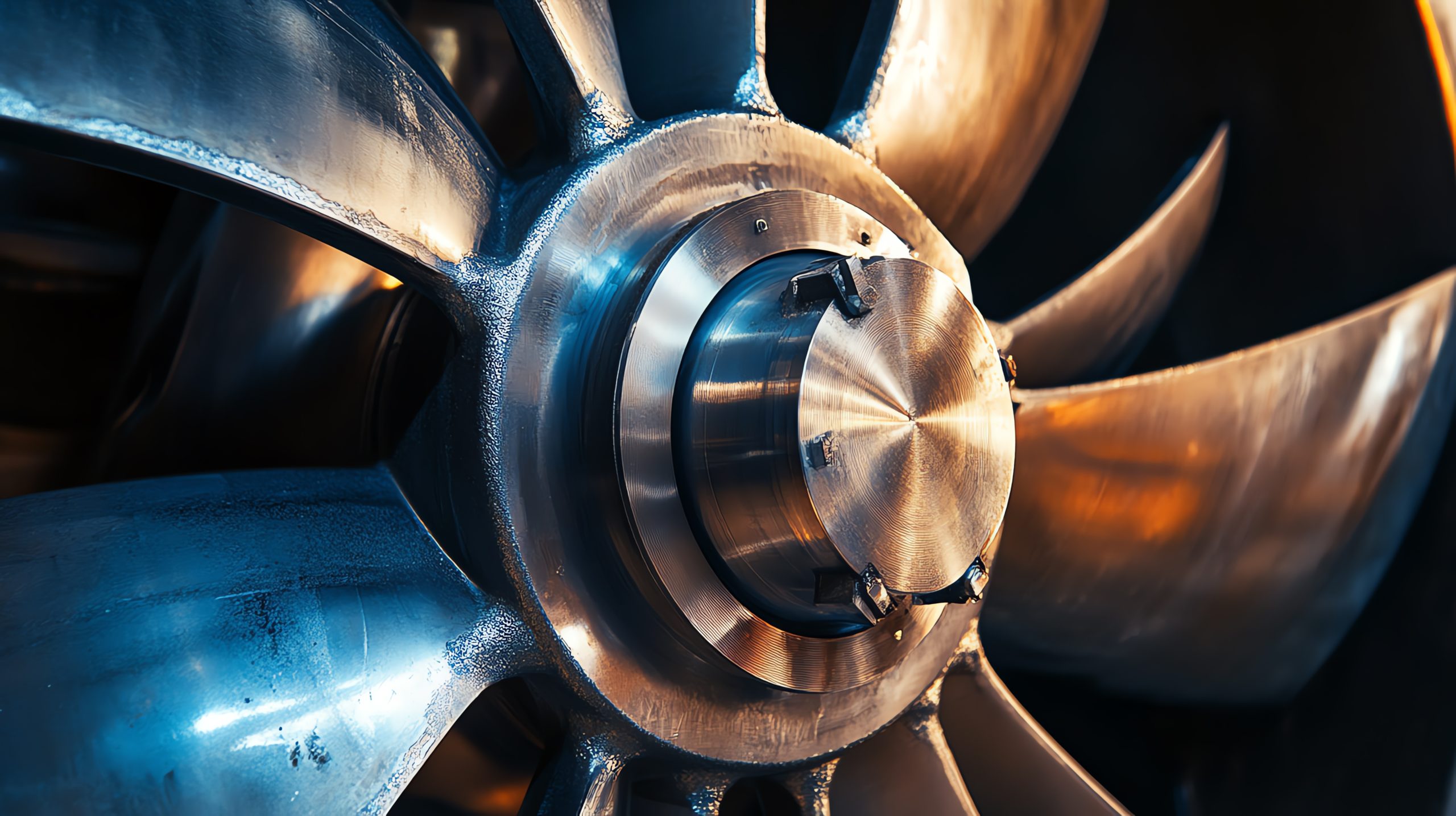
Critical pump component procurement demands verifiable design accuracy. For impellers, volute cases, and bearings, geometric accuracy and material integrity directly influence system performance outcomes.
Minor design inconsistencies can result in measurable performance degradation and premature system failure. To address these risks, procurement teams increasingly adopt integrated sourcing approaches that encompass valves, flanges, sealing solutions, and fasteners alongside pump components, establishing specification control and reducing supplier interdependency.
For global procurement teams, India’s pump manufacturers sector offers both scale and innovation, merging export-ready quality systems with cost-efficient engineering talent. India’s pump market, valued at USD 2.90 billion in 2024, is projected to reach USD 4.14 billion by 2030, growing at a 6% CAGR. This growth is supported by steady industrial expansion, with industrial production rising 5.4% in July 2025, up from 3.7% in June.
Global buyers are increasingly engaging Indian suppliers that offer digital validation, real-time monitoring, and simulation-based optimisation, a significant leap from legacy ‘print-to-part’ manufacturing.
Conventional specification methods for centrifugal pump parts have become insufficient. CFD and FEA, once reserved for high-end research and design development, are now essential tools for risk reduction, quality assurance, and informed sourcing, even when adjacent components such as hydraulic cylinders, hose assemblies, or enclosures are sourced elsewhere.
What are CFD & FEA?
CFD
CFD helps visualise fluid flow and pressure within the pump before prototyping, revealing high-pressure zones, dead spots, and energy losses, which are critical for centrifugal pump parts. Validated models help suppliers align with international test standards such as ISO 5199 and ISO 2858, enabling verifiable compliance.
FEA
FEA addresses the critical question of whether a component can withstand operational stresses over time. It shows how stresses and strains build under load, where fatigue could start after months of duty, and how vibration might beat up bearings if the balance is off. On pump components, it helps prevent cracked hubs, bent shafts, and gradual failures that often surface later as warranty or reliability issues.
For skid‑mounted builds, validated designs for custom‑fabricated equipment bases and coupling‑ready assemblies help align pump components with drive systems, reducing installation rework and shortening commissioning time.
Together, CFD and FEA validation help manufacturers predict performance, reduce design iterations, and minimise post-production failures.
Work with manufacturers who back performance with data. Reach rivexa’s verified supplier network here.
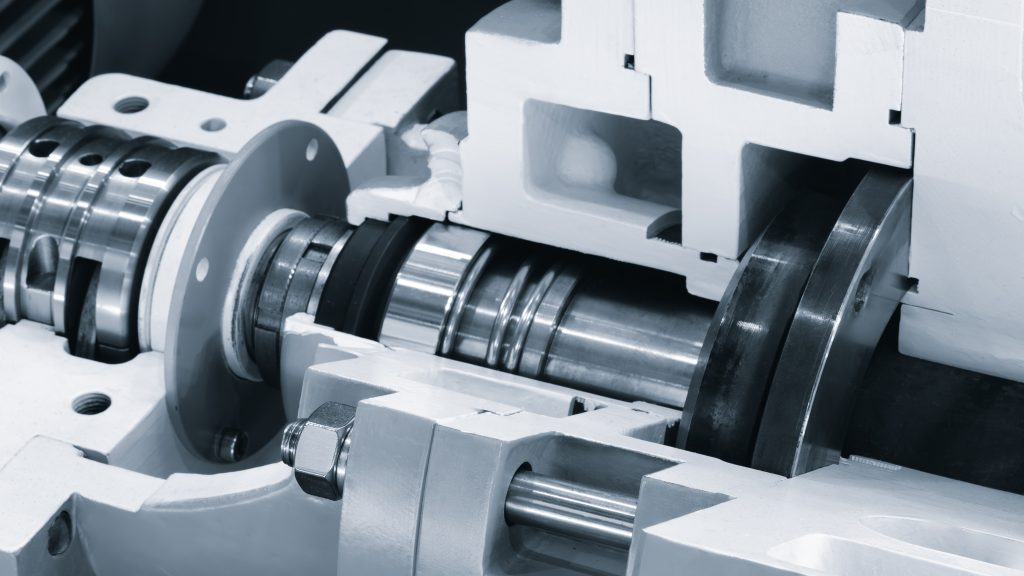
How validation enhances pump components
1. Reduced performance risk at the order stage
When pump components are validated digitally before production, sourcing professionals gain a clearer view of performance risk before issuing a purchase order. Specifications move from being theoretical to demonstrably achievable, which reduces the gap between design intent and delivered hardware.
2. More objective supplier evaluation
Digitally validated components also simplify supplier comparison. When performance data accompanies drawings, procurement teams can assess suppliers’ execution capabilities rather than rely on marketing claims. This creates a more objective sourcing process, especially when evaluating suppliers across different regions or production setups.
3. Lower downstream cost and rework
From a commercial standpoint, validation reduces downstream costs. Fewer design revisions, rejection rates, and reduced dependency on repeated inspections translate into shorter sourcing cycles and more stable landed costs. This is particularly relevant for buyers managing multisite programmes or long-term spares contracts, where consistency matters more.
4. Sourcing continuity planning
Validation-backed sourcing also strengthens continuity planning. When designs are proven digitally, alternate suppliers can be qualified faster using the same reference models, avoiding full requalification cycles. This supports dual-sourcing strategies and reduces single-supplier risk without compromising performance requirements.
Illustrative applications
Impeller redesign for marine pump applications
In marine pump programs, impellers can underperform at the Best Efficiency Point (BEP) due to suboptimal blade geometry or leading-edge design. In such scenarios, CFD simulations are typically used to refine blade angles and adjust leading-edge thickness. These refinements are intended to improve flow uniformity and reduce hydraulic losses.
When validated through testing, such optimisation can translate into lower power draw at the target head, reduced heat generation, improved motor efficiency, and longer service life during continuous marine operations.
Volute casing optimisation in seawater pump systems
In seawater and desalination applications, uneven flow distribution and localised cavitation near the volute tongue are common challenges. CFD-led contour adjustments are often applied to correct velocity imbalances and stabilise pressure zones within the casing.
When executed effectively, these design adjustments help achieve smoother suction flow, more stable pump curves, and reduce stress on internal components, supporting longer operational life and lower maintenance frequency in corrosive, high-duty environments.
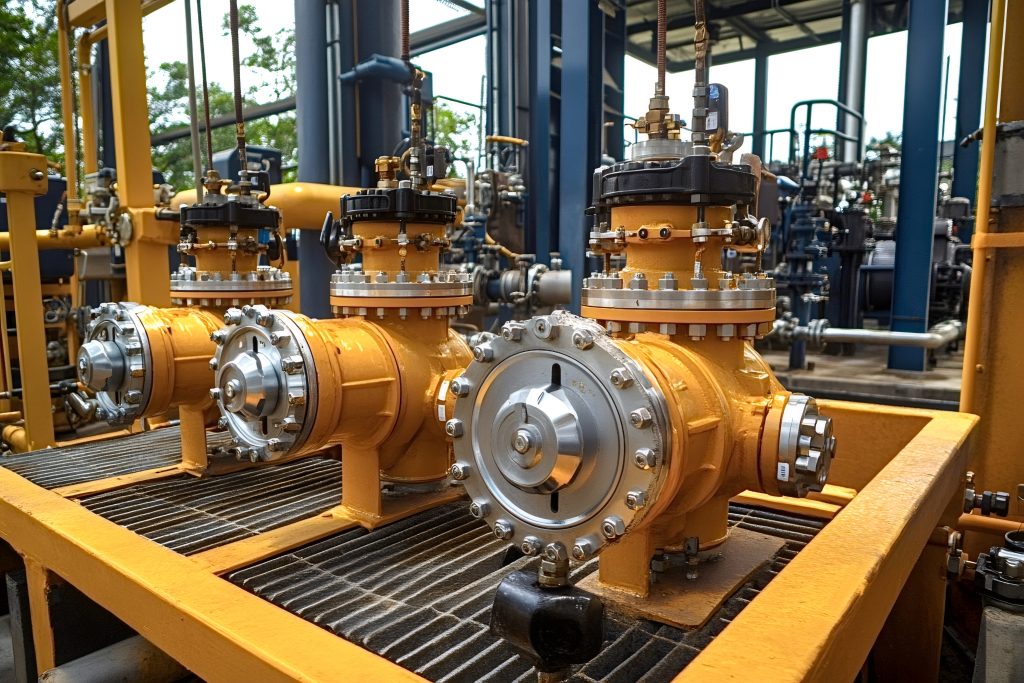
3. Reduced validation overhead in pump components sourcing
With validated parts, OEMs can avoid relying heavily on expensive physical prototypes or lengthy inspections. This confidence enables procurement teams to place orders more quickly, knowing the components will perform as expected.
Practical limits & mitigation
Getting CFD and FEA right isn’t as simple as clicking a button. It all starts with setting the proper boundary conditions. Think about input pressures, flow rates, and material properties. If these aren’t accurate, the whole simulation can lead you astray.
CFD and FEA simulations demand high computational resources and specialised software licenses. Fine-tuning simulation models can extend project timelines if not managed proactively.
Finally, there’s a difference between creating a perfect virtual model and actually making those pump components in the real world. Engineers need to bridge the gap by turning optimised designs into manufacturable pump components without compromising performance. This balance is tricky but crucial.
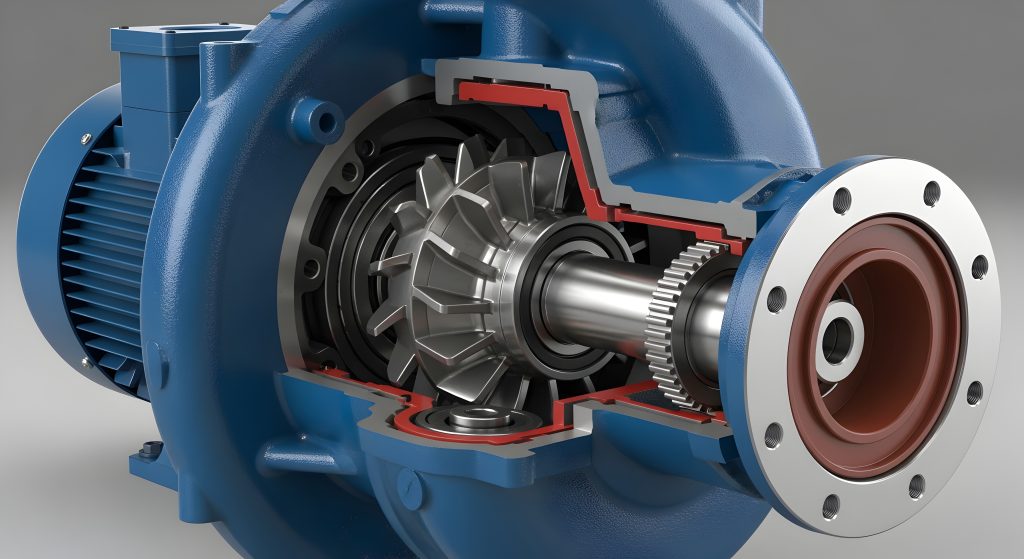
Simplifying the sourcing of pump components
When you’re sourcing particular pump components, having a partner that understands validation makes all the difference.
Vetting suppliers with simulation capabilities
rivexa assesses suppliers against documented engineering practices and quality management systems, enabling buyers to engage with manufacturers capable of supporting data-driven design and performance evaluation. This approach provides procurement teams with access to suppliers whose pump components are supported by verifiable technical documentation and analytical rigour.
Data validation & quality monitoring
rivexa supports procurement teams with structured documentation review and production-stage visibility, helping reduce deviation from approved specifications. This oversight significantly reduces the risk of deviation from validated designs during production.
With rivexa’s verified suppliers, sourcing from India becomes more organised and easier to manage across suppliers. International sourcing teams appreciate this clear communication and smooth flow, reinforcing the integrity of their supply chains. For global buyers, this means predictable component quality, validated designs, and reduced on-site inspection requirements.
Accelerate your sourcing workflow with verified suppliers on rivexa’s platform. Explore verified suppliers now.
Trusted manufacturing for critical pump components
Today, validated pump components bring not just efficiency but peace of mind, lowering costs while boosting performance. rivexa invites engineering teams and OEMs to take the next step.
Share your component specifications or custom drawings for impellers, volute casings, valves and flanges, and any enclosures or skid frames. Unlock the full potential of custom manufacturing with rivexa, your trusted partner in sourcing precision-engineered pump components from India.
Partner with rivexa to bridge design validation and manufacturing reality for impellers, volutes, casings, and other precision pump components. Consult our experts now.

Leave a Reply