When on‑time delivery and sustainability performance share the same dashboard, sourcing fabricated parts from India offers a cleaner, more predictable route to both. Coastal shipping volumes are up 118% over the decade, easing road congestion and emissions, so that custom metal parts move without defaulting to premium freight.
With Indian suppliers now integrating ESG metrics and real-time order tracking into their workflows, maritime procurement teams can align uptime goals with sustainability commitments.
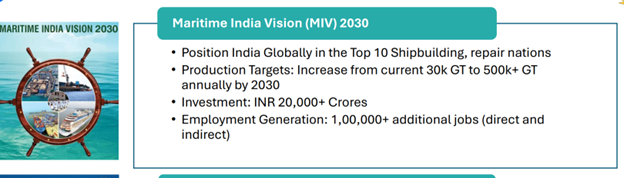
Inland waterway cargo has surged 700%, creating steadier corridors for heavy, over‑dimensional modules as generally found in metal parts manufacturing. The longer runway set by Maritime India Vision 2030 backs greener build-and-repair pathways, which means your RFQs can require traceability, certified materials, and ISO 14001 without stalling lead times.
The role of fabricated & custom metal parts in shipyard uptime
When a vessel goes into dry dock, the clock starts ticking. Uptime depends on whether the right fabricated parts land on your floor, first time fit, with paperwork that your class surveyor won’t question.
That’s the day-to-day value of sourcing precise valve assemblies, custom pipe spools, and deck outfitting manufactured under ISO 9001 and codified welding procedures aligned with the national maritime roadmap. These precision assemblies—machined and tested to class standards—allow procurement teams to reduce dockside rework and accelerate vessel readiness.
Why precision parts keep schedules on track
- Tighter tolerances and certified welds reduce rework, so that procurement teams aren’t left machining on the dock to make things fit.
- Traceable materials and documented procedures speed class acceptance, trimming days off approval loops.
- Configured-to-order valves and spools simplify installation, which matters when a dock window is measured in hours, not days.
Structural basis of manufacturing speed
Coastal clusters in Gujarat and Kerala bring key processes under one roof – CNC machining, coatings, heat treatment, and NDT. It ensures that a change in engineering orders don’t bounce between vendors. Speed in fabrication isn’t accidental; it’s built into India’s clustered manufacturing infrastructure.
Capacity benchmarks matter for contingency planning. Gujarat’s 936,000 DWT and Kerala’s 253,000 DWT cluster capacities establish India’s bench strength for overflow orders and parallel builds. Integrated labs and QA cells shorten the “test-tweak-release” cycle, keeping first-article approvals on track.
What exporters can deliver
India’s marine component exports, including fabricated parts, precision valves, and deck subsystems, have been steadily increasing, with consistent outflows into the GCC and Southeast Asian yards.
Port and corridor upgrades under the ₹5.79 lakh crore Sagarmala project further improve the reliability of feeders, which shows up as fewer missed sailings and cleaner handovers.
If your build or retrofit depends on critical path components, custom metal parts from India give you three practical gains:
- Predictable fit
- Paperwork that passes scrutiny
- Better logistics
It’s not about buying metal. It’s about buying back time.
Sustainability‑first sourcing for fabricated valves and parts
Sustainability now ranks alongside cost and quality as a core KPI in maritime RFQs. For shipyards balancing emissions targets with turnaround times, the smartest move is specifying sustainability and quality together.
Vendors in India are layering ISO 14001 on top of ISO 9001. Environmental performance for custom metal parts is now tracked with the same precision as tolerances, weld quality, and NDT reporting. That pairing fits the sector’s decarbonization path and gives owners and lenders the evidence they expect under IMO 2050, without slowing approvals.
1. Cleaner fabrication on the shop floor
The shift in sustainability shows up where it matters: at the weld bench and in the paint booth. Fabricators are optimizing weld procedures to cut gas use and rework, adopting VOC‑controlled coating systems, and recovering blast media to reduce waste. These are all practical strategies that lower shop emissions while keeping class requirements intact for metal parts manufacturing.
At the same time, traceability is tighter. Heat numbers and mill test certificates are logged digitally, linking each fabricated part to certified inputs and shortening class survey cycles by closing gaps in paperwork.
2. Financing that accelerates ESG upgrades
Policy support is translating into real plant upgrades rather than slideware. Sectoral financing and risk‑coverage mechanisms are helping shops invest in:
- Energy‑efficient utilities
- Wastewater treatment
- Emissions controls
All these improvements show up in ESG audits and tender documentation for custom metal parts. With infrastructure status and targeted funds lowering capital costs, environmental upgrades become a competitive capability, not a cost drag. It allows suppliers to meet tougher RFQ clauses without stretching lead times.
3. Logistics that cut carbon without cutting time
Sustainability doesn’t stop at the factory gate. Port modernization and inland waterway projects are reducing dwell and queue times that inflate Scope 3 emissions on shipments of valves and fabricated parts, while improving the predictability of corridors for retrofit campaigns where every dock day carries a price.
More reliable multimodal options mean fewer expedites and reroutes, stabilizing inbound flows and enabling procurement to plan metal parts manufacturing deliveries with lower variability and a smaller logistics footprint.
What sets India apart in custom metal fabrication
India gives procurement teams a cleaner path to on‑time, class‑aligned deliveries. Shops run to internationally recognized quality systems with ABS/DNV/BV familiarity. As a result, sampling and sign‑offs move faster, and dock time isn’t wasted.
On the logistics side, upgraded corridors under Sagarmala improve the consistency of feeders and the predictability of gate‑in, which are critical when retrofit windows are tight.
Policy support matters too. Capital infusion and risk cover enable investments in tooling, fixturing, and continuity for complex, multi‑stage orders. Procurement teams can de-risk entry by piloting valve or pipe spool batches, assessing delivery adherence and quality metrics before scaling volume.
Source metal parts faster and smarter with rivexa
When dock windows are tight, guesswork isn’t an option. rivexa, the digital export marketplace, connects procurement teams directly to export‑ready Indian clusters. We make sure that your RFx, quality checks, and production milestones live in one place, giving you real‑time visibility and fewer surprises while sourcing fabricated parts. With us, rest assured that specifications stay tight, documents stay clean, and the schedule holds.
Start small and move fast as you source custom metal parts from India. Run pilot orders on valves, pipe spools, or deck assemblies and route them through predictable corridors for steady handoffs.
With rivexa, every supplier is verified, every document is traceable, and every delivery milestone is visible in real time, minimizing disruptions across ship repair and retrofit cycles. Ready to streamline your sourcing process?
Get connected to our specialists here. Access export-ready custom metal part suppliers via rivexa.

Leave a Reply