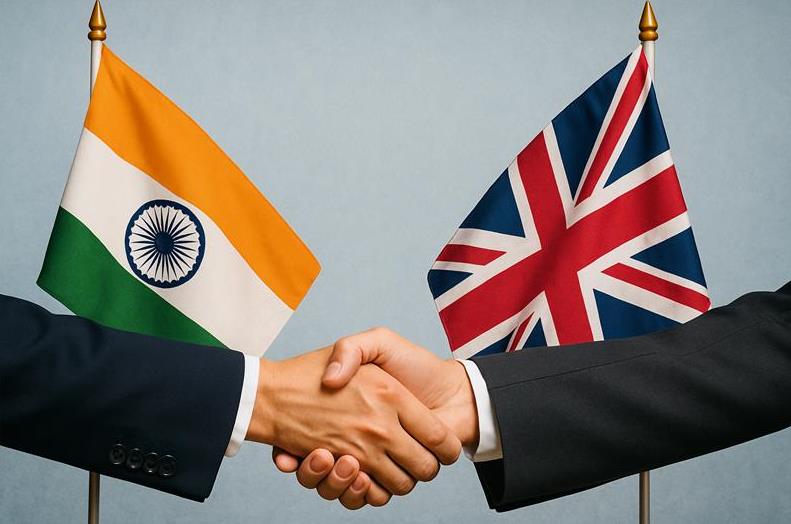
The India-UK Free Trade Agreement, signed on 24th July 2025 after nearly two years of negotiations, marks a pivotal moment in global trade strategy. Projected to open up £25.5 billion in annual trade, it’s not just a diplomatic win. It’s a reordering of procurement priorities.
For India, it’s the first major FTA in over a decade. On the other hand, it’s the most comprehensive trade agreement for the UK after Brexit.
The trade deal covers some major industries like textiles, leather, electronics, pharmaceuticals, automotive, and clean energy. So, what’s on cards? It paves the way for faster customs processes, reduced tariffs, and stronger legal protections – factors that directly influence sourcing decisions.
As UK Prime Minister Keir Starmer noted, “Our landmark trade deal with India is a major win for Britain. This is about putting more money in the pockets of hardworking Brits and helping families with the cost of living.”
Why This FTA Is Different? Scope and Strategic Intent
The India-UK FTA speaks more than reduced tariffs. This makes it strategically more significant than conventional trade pacts. The FTA aims to double bilateral trade to $120 billion by 2030. It’s also likely to speed up cross-border investment across top sectors.
The agreement includes provisions on services, digital trade, and mobility, expanding talent access and tech collaboration. It also opens doors for Indian firms to participate in UK public procurement and vice versa, an uncommon step in FTAs.
“In an era of rising protectionism, today’s announcement sends a powerful signal that the UK is open for business and remains absolute in its commitment to free and fair trade.” said Rain Newton-Smith, CEO of the Confederation of British Industry (CBI). This demonstrates the broader strategic weight of the new deal.
“I consider this very significant. The UK and India are natural partners. Today marks a historic day in our relations. This will pave a very strong path for the future generations of India and the UK. This is adding a new chapter in business and trade,” Prime Minister Narendra Modi commented.
A Sectoral Overview for Tariff Reductions
The India-UK FTA brings tangible benefits for industries on both sides. For Indian exporters, sectors like textiles, pharmaceuticals, engineering goods, and agri-products finally get the competitive edge they’ve long sought in the UK market.
Take garments, for instance, where duties of 8-12% have now been slashed to zero. That alone could give a major push to Indian apparel manufacturers, especially those in smaller towns and MSME clusters. Pharma companies can expect smoother approval processes, while agricultural and engineering exporters gain from clearer trade pathways.
The UK sees big gains too. Scotch whisky, one of its most iconic exports, will now face significantly lower tariffs in India. Tariffs on electric vehicles, previously an eye-watering 110%, are being brought down to just 10%, opening up India’s booming EV market. Cosmetics and aerospace firms are also set to benefit from reduced duties and improved access.
Rolls-Royce CEO Tufan Erginbilgic, in this context, stated, “We welcome the provisions in this Free Trade Agreement, including those that bring closer alignment with international standards for trade in civil aerospace”.
Breaking Down the Benefits: Sector-Wise Tariff Reductions and Market Access :
| Sector | India’s Concessions (UK Exports to India) | UK’s Concessions (Indian Exports to UK) | Tariff Before FTA | Tariff After FTA | Projected Impact |
| Automotive | EV tariffs quota-based: 110% to 10% (over 10 yrs) | Duty-free on most auto parts, engines | 110% (auto, EV) | 10% (quota), staged | Major UK brands gain market access; India protects some domestic players |
| Alcohol/Spirits | Scotch whisky: 150% → 75% immediately, then 40% over 10 yrs | N/A | 150% | 75%, then 40% (10 yrs) | Only >$5/Ltr or $6/750ml eligible; domestic sector shielded |
| Textiles & Apparel | N/A | 1,143 product lines duty-free | 10–12% | 0% | India expects 5% more UK share, gains vs. Bangladesh & Cambodia |
| Leather & Footwear | N/A | Nearly all lines duty-free | Up to 10–20% | 0% | Key competitive boost; jobs & exports to rise |
| Marine Products | N/A | Tariffs eliminated (shrimp, tuna, fish, etc.) | 4.2–8.5% | 0% | India expected to expand UK market share, esp. for coastal states |
| Engineering Goods | Tariff on UK machinery, aerospace, electronics (11–22%) → 0% | Duty-free access for Indian engineering goods | Up to 18–22% | 0% | Indian exports could double; UK machinery gains new market access |
| Pharmaceuticals & Medical Devices | Tariffs reduced | Zero tariffs on generics, medical devices | ~10% | 0% | Indian generics, medtech more competitive in UK market |
| Chemicals & Plastics | N/A | 30–40% export rise expected | ~5–10% | 0% | Strong growth in exports and sector competitiveness |
| Information Technology | N/A | Improved access for Indian IT, software, services | N/A | N/A | IT exports to the UK may rise 15–20% annually |
Opening Public Procurement Markets
For the first time, UK companies will gain meaningful entry into India’s vast public procurement market, valued at over $46 billion. Thanks to “Class II” supplier status, British firms can now compete for government contracts across sectors like railways, renewables, and defense, without needing to establish a local base.
Companies in India will get a clearer path into the tender ecosystem of the UK. Particularly, they can tap areas like infrastructure, health tech, and clean energy. There’s a chance for both sides to enter joint ventures and hybrid sourcing models. Even long-term institutional partnerships now seem to be a reality.
Stating in a post on X about this landmark meeting with his UK counterpart, Prime Minister Narendra Modi highlighted that this FTA will enhance market access for Indian textiles, footwear, jewelry, industrial goods, agricultural products, and processed foods in the UK.
“All of this will benefit our people, especially farmers, women, youngsters, fishermen and MSMEs,” he noted in his post (ANI).
This FTA breaks ground on workforce mobility. Mutual recognition of qualifications and relaxed visa norms will make it easier for Indian professionals to work in the UK across sectors like tech, finance, and healthcare. This brings an additional bonus for Indian exporters, as they are exempted from social security contributions in the UK. That comes to an estimated annual saving of ₹4,000 crore, directly improving cost efficiency.
What Changes for Sourcing Teams
For sourcing and logistics teams, the India-UK FTA brings real operational gains.
Here’s what’s changing on the ground:
- 48-hour customs clearance commitment reduces bottlenecks.
- Electronic documentation and duty deferment options mean faster movement, and fewer manual errors.
- Better alignment with ERP and TMS systems makes planning and delivery timelines more predictable.
For SMEs, this reduces the “entry friction” that often makes cross-border trade daunting.
India is positioning itself as a viable, long-term sourcing hub, with key centres located at Tiruppur (knitwear) and Ludhiana (engineering goods).
Smart Trade Needs Smarter Moves: Is Your Sourcing Strategy Ready?
Beyond just a trade policy, the India-UK FTA is a practical playbook for sourcing teams ready to pivot. With tariffs dropping, compliance simplified, and access widening on both ends, the opportunity is clear.
Here’s where smart businesses are starting:
- Mapping SKUs to the new tariff schedules
- Shortlisting procurement partners in India’s growing export clusters
- Using digital tools to stay ahead of regulatory shifts
rivexa is your digital co-pilot for sourcing from India.
Built for procurement leaders who need speed, visibility, and confidence in every sourcing decision. With verified suppliers and instant RFQs, we turn trade insights into sourcing action—layering intelligence into every supply chain decision.
This deal isn’t just about trade. It’s about transformation. The FTA has set the stage. Now it’s your move.

Leave a Reply