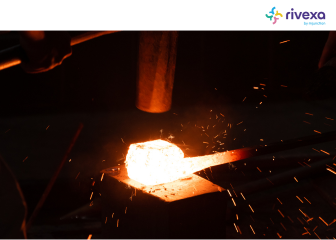
Modern forging processes are evolving, only to cater to the growing need of industries that normally work in extreme conditions. The vehicles and machinery built using components made through Custom metal forging solutions run these industries.
Why strength is a critical factor when building components
Component strength directly affects your operational success in industrial applications: from engine parts to construction machinery, to power generator equipment. Structural integrity is a key factor that is assessed during Custom metal forging when building such parts. These parts form a small part of much larger machinery that ensures greater safety compliance, operational efficiency, and warranty costs.
The precision forging processes available through rivexa’s network of Forging Manufacturers are advanced enough to be applied to varied project requirements. Our Metal Forging Suppliers are capable of improving the strength of metals at the microstructural levels. This guarantees a higher tensile strength and impact resistance shielding that outshines conventional custom metal forging methods.
As manufacturers face increasing pressure to optimize performance while managing costs, our Industrial Forging Suppliers provide the engineering expertise that your applications demand—without compromising your production timeline.
Modern Custom Metal Forging Techniques Enhancing Strength
A majority of the technological advancements occurring in custom metal forging revolve around the development of stronger, more reliable products or parts:
Precision Forging
Precision forging is popular with many Precision Forging Manufacturers because they can use this process to build near-net-shape components and reduce the amount of waste materials left over. The custom metal forging process permits higher dimensional accuracy – critical for guaranteeing increased precision and strength. In this process, Precision Forging Manufacturers can experiment with intricate designs without compromising on the strength of those designs.
Cold vs. Hot Forging
Forging is further split into cold and hot forging. Both have distinct advantages in terms of strength:
- Cold Forging:
Typically, Industrial Forging Suppliers would do this process at or near room temperature and is ideal for producing smaller, intricate parts with superior surface finishes and higher dimensional accuracy.
Parts made through this Custom metal forging process are enhanced through work hardening. This is when metal is intentionally deformed to make it thicker. Metal forging suppliers might resort to cold forging if they need to create very strong components ideally meant for the electronics and automotive sectors.
- Hot Forging:
As the name implies, this process uses extreme temperatures to limit strain-hardening risks. It normally builds bigger parts, where the heat quickly deforms the metal to create a stronger, ductile piece. Precision Forging Manufacturers typically use hot forging to make bigger, stronger parts made for heavy machinery or bigger vehicles.
Closed-Die Forging
Closed-die or impression-die forging is used for shaping metals inside a die cavity. Precision Forging Manufacturers find this method beneficial because it reduces the amount of waste material, and the shapes forged are very precise. This method ensures stronger products by improving the grain structure of the metal for higher uniformity and better mechanical properties.
Advanced Materials in Forging for Enhanced Strength
Apart from advancements being made to the techniques, the materials used by Forging parts manufacturers have also seen their fair share of improvements as well – like alloys and super alloys. These and other high-performing metals are fast becoming the norm when choosing materials to build parts for heavy industries.
- Alloy Steel
This is a carbon steel that can contain added metals like nickel, boron, chromium, and manganese. As a result, it has improved toughness, corrosion resistance hot hardness and hardenability.
- Titanium Forging
Titanium is another material that is preferred over other materials for most applications as it has a higher strength-to-weight ratio. In other words, components made from titanium tend to be lighter and stronger. This is why it is ideal for making the landing gears and engine parts for most of the aircraft or planes you see today.
- Superalloys
Components that run the machinery in power generation or oil and gas fields are better suited by superalloys like nickel or cobalt. Their higher temperature strength and oxidation resistance level make them perfect for building containers, vessels, turbines, and rigs exposed to heat.
Advantages of forging techniques used today
Benefits of Modern Forging Techniques
The adoption of modern techniques by leading Forging parts manufacturers brings multiple benefits, particularly in enhancing the strength and durability of industrial components:
- Improved Mechanical Properties
The ability of forging to enhance grain structure results in parts with better fatigue resistance, higher impact strength, and improved toughness.
- Cost Efficiency
Cost efficiency is probably one of the biggest plus points, and it includes the reduction of waste materials. This is why metal forging suppliers increasingly prefer precision forging techniques when producing high-strength components.
- Scalability and Flexibility
From small, intricate components to large, heavy-duty parts, modern forging techniques provide flexibility in production. Industrial forging suppliers can now offer scalable solutions that meet the specific needs of various industries.
From precision forging to advanced die technologies, our production partners can now achieve unprecedented levels of strength, durability, and precision. As manufacturing technology continues to evolve, your choice of forging partner becomes increasingly critical to your success.
Conclusion:
The question is: Are your current custom metal forging processes equipped to meet your industry’s rising performance demands while keeping you ahead of the competition? Contact rivexa today to know how you can do this.

Leave a Reply