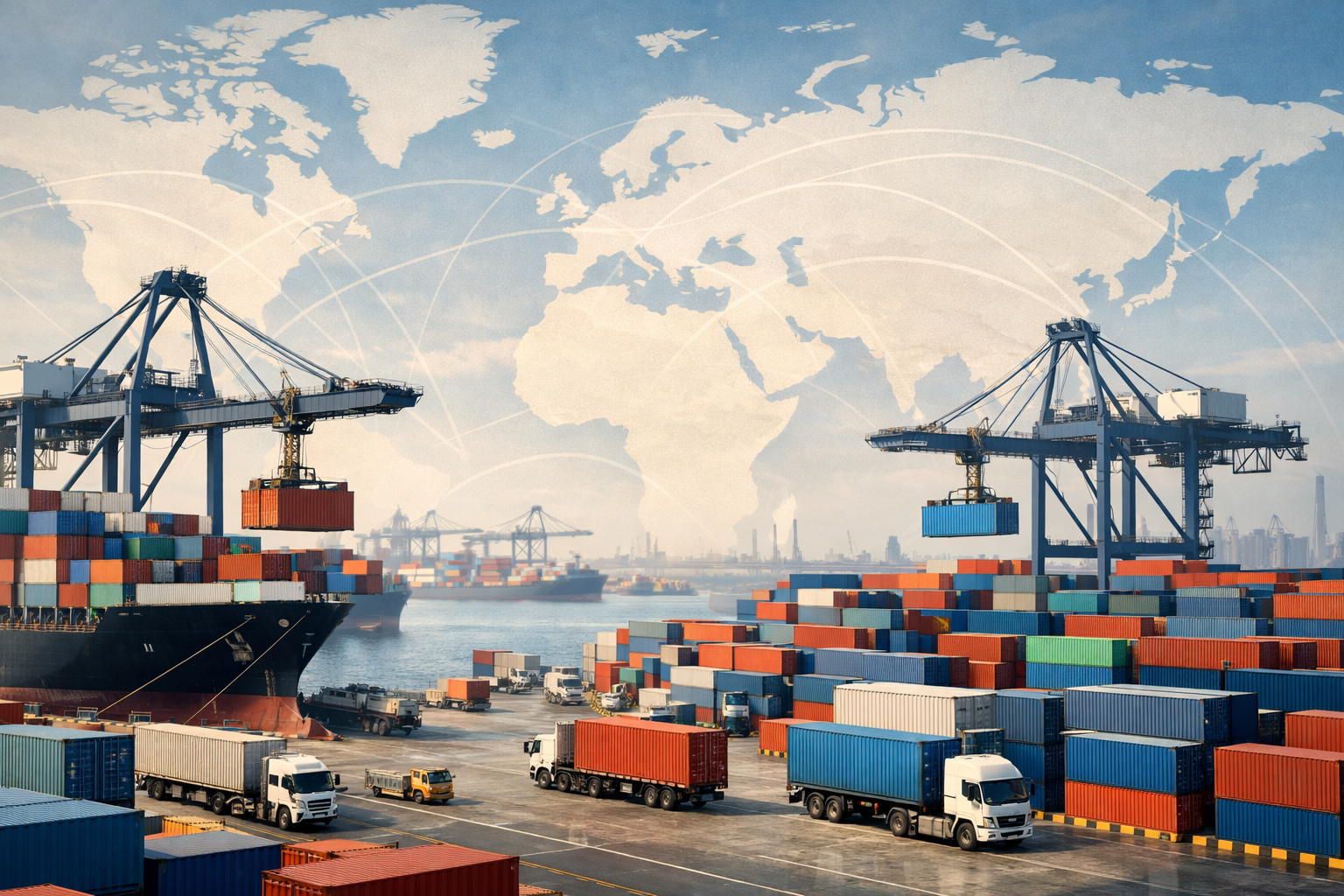
The Government of India has announced relaxations for exporters facing logistical challenges linked to the ongoing crisis in West Asia, extending timelines for the fulfilment of export obligations under certain trade schemes.
Relief measures announced to support exporters
According to a public notice issued by the Directorate General of Foreign Trade (DGFT), the extension applies to export obligation periods associated with specific Advanced Authorisations and Export Promotion Capital Goods authorisations expiring between March 1, 2026 and May 31st, 2026. The revised deadline allows exporters to complete their obligations until August 31st, 2026, without payment of any composition fee.
The notice stated, “In view of the prevailing geopolitical developments affecting international shipping routes and global supply chains, and with a view to facilitating exporters, the export obligation (EO) period/block wise EO period in respect of specific advance authorisations and EPCG authorisations expiring between March 1st, 2026 and May 31st, 2026 has been automatically extended up to August 31st, 2026 without payment of composition fee.”
Under the Export Promotion Capital Goods (EPCG) scheme, domestic firms are permitted to import machinery without duty, subject to meeting specified export obligations over a defined period.
Authorities indicated that the extension would be granted automatically and exporters would not be required to submit applications or pay additional fees to obtain the benefit. The measure also covers Advanced Authorisation for Annual Requirement and Special Advance Authorisation categories.
Officials noted that the regional offices of the DGFT will verify compliance at the stage of issuing the Export Obligation Discharge Certificate or during closure or regularisation of authorisations.
Recent data indicate that India’s merchandise exports increased 0.61% to USD 36.56 billion in January, while the trade deficit widened to USD 34.68 billion, reflecting continued volatility in global trade conditions.
The government stated that the measure aims to provide operational flexibility to exporters as disruptions in shipping routes, freight costs, and logistics continue to affect international trade flows.
Source: Economic Times

Leave a Reply