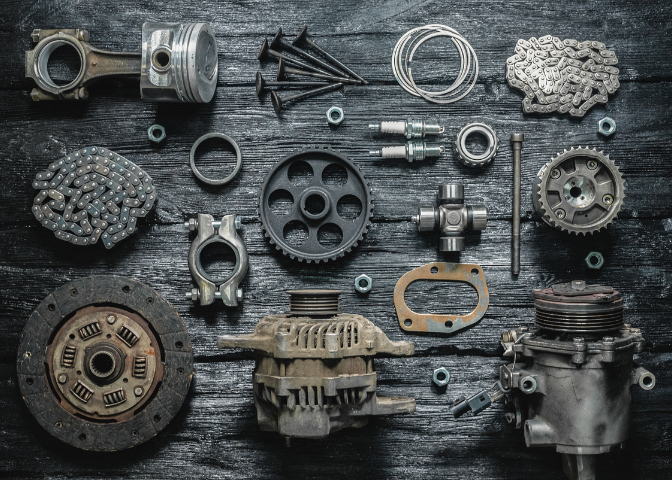
Being a procurement head or plant manager, you might relate to this exact situation. A machine that delivered reliable performance for years suddenly comes to a halt just because a single mechanical part has failed. The original manufacturer no longer produces it, and the replacement needs to be imported. Ultimately, you’re left clueless about how long you need to wait. At this point, many plants begin exploring re-engineering to recreate the required part locally, instead of waiting on uncertain imports. Imported spares alone push landed costs higher by 10-15% due to logistics delays, foreign exchange movement, and inventory handling, even before production resumes. What should have been a routine maintenance issue eventually turns into a business risk.
This is the reality many Indian manufacturing leaders are dealing with today, and it has changed how spare-part strategies, including re-engineering decisions, are viewed.
Why conventional spare sourcing is under strain
Importing OEM spares was once considered the safest route. Over time, however, that assumption has changed.
Cost pressure builds up
Plants are dealing with:
- Long lead times that force higher inventory holding
- Capital locked up at financing costs of 10-12%
- Exchange rate movement and variability in logistics are inflating landed costs
Availability is no longer assured
Even after absorbing these costs, the supply remains uncertain.
- Some parts are obsolete
- Some are single-sourced
- Some arrive late despite premium pricing
No wonder procurement teams face uncertainty. Operations teams, on the other hand, are forced to plan maintenance around the availability of parts rather than production needs. This is where re-engineering emerges as a practical alternative.
Re-Engineering as a Strategic Response
In most plants, presses, mills, furnaces, and compressors installed years ago continue to perform reliably. The challenge is not the asset, but keeping it supported.
Recreating parts locally offers a practical alternative when OEM drawings or specifications are unavailable. Instead of waiting for imports, plants use the failed part itself as the reference point.
From assessment to production
The approach typically involves:
- Physical assessment of the component
- Understanding its function and operating conditions
- Verifying the material and performance requirements through testing
- Recreating designs and producing samples
- Testing and approval before bulk production
Once developed, the impact is clear:
- Lead time is reduced by up to 50% compared to imports
- Recurring costs fall by 30-50%
- Operational uptime improves by 10-15% due to timely availability
Documentation gaps no longer stop progress
A common concern raised in leadership reviews is the absence of technical documentation. Many older machines were supplied with limited drawings, and over time, records were lost or never shared by OEMs.
Today, this no longer prevents progress. With physical assessment, testing, and controlled manufacturing, even obsolete or low-support parts can be recreated. This significantly reduces downtime compared to imports. Facilities no longer need to depend on uncertain timeframes from the original brand.
Reliable spare-part supply, enabled by rivexa
rivexa operates as a B2B marketplace backed by mjunction, a joint venture of Tata Steel and SAIL, with 25 years of experience in industrial supply ecosystems.
It supports custom manufacturing across:
- Casting and machining
- Forging and machining
- CNC machining
- Fabrication and extrusion
The digital export marketplace addresses two needs:
- Replacement of legacy and imported OEM parts where specifications are unavailable
- Local development of less critical and obsolete spares to reduce downtime and cost exposure
The digital sourcing platform has a network of over 800 verified MSME suppliers supporting this execution. Digital QA, QC, and project tracking ensure visibility from feasibility through inspection and dispatch. This keeps quality consistent, with predictable deliveries.
The rivexa advantage in spare-part strategy
Re-engineering is increasingly becoming a strategic lever for manufacturers to manage risk, control costs, and protect production continuity. As supply chains remain unpredictable and OEM support for legacy equipment declines, spare-part decisions now have a direct impact on operational performance.
This is where the rivexa advantage comes into play, enabling manufacturers:
- Reduce dependence on imported and single-sourced OEM spares
- Release working capital tied up in high inventory buffers
- Extend the service life of existing assets through assured part availability
For leadership teams, the spare part strategy has become as important as maintenance planning itself. Consult our team to streamline re-engineering of the necessary parts and keep your systems optimally functioning.

Leave a Reply