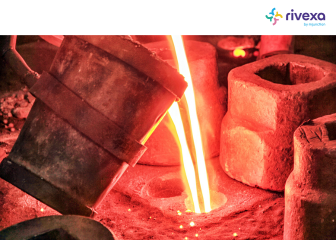
Casting technology is a cornerstone of manufacturing, allowing industries to produce the components and parts they need – from simple metal parts to complex components. As the demands for higher precision, efficiency, and quality have grown, so have the advancements in Precision Metal Casting methods and materials. These innovations are enhancing production efficiency, improving product quality, and shaping the future of manufacturing across various sectors.
The Evolution of Casting Methods
Custom Metal Casting has evolved significantly from traditional sand and die casting methods to more advanced processes that offer superior precision and efficiency. Traditional methods like sand casting, while still useful, often struggle to meet the demands of modern industries that require parts with tight tolerances and high-quality finishes.
Investment Casting
Among the most notable advancements in Custom Metal Casting methods is investment casting. This technique, also known as lost-wax casting, has become a preferred method for industries requiring high precision and intricate detail. The process allows manufacturers to produce components with minimal material waste, reducing the need for extensive post-processing. Investment casting is widely used in industries like aerospace and medical device manufacturing, where precision is critical.
Centrifugal Casting
In this Precision Metal Casting technique, molten metal is poured into rotating moulds. A centrifugal force pushes the metal to the inner walls of that mould, resulting in a product that has stronger structural integrity and reduced porosity. This method is normally applied when building cylindrical components like bearings and pipes, where internal strength is a critical factor.
Die casting
Die casting services have undergone immense improvements with the integration of automation. Automated die-casting processes enable faster production cycles while ensuring consistent quality and lowering labor costs. Such die-casting services are widely used in the automotive industry for creating components like engine blocks and transmission housings, where durability and accuracy are vital.
Casting Materials Innovation
Advancements in casting are not limited to methods; material innovation is also driving progress. As industries such as automotive, aerospace, and consumer electronics push for lighter and stronger components, new materials are emerging to meet these demands.
Lightweight alloys
One major development is the use of lightweight alloys. Materials such as aluminum and magnesium are increasingly used in casting to create lightweight parts that offer both strength and durability. This is particularly important in the automotive and aerospace sectors, where reducing component weight directly improves fuel efficiency and performance. Additionally, these materials are highly resistant to corrosion, making them ideal for long-lasting applications.
High-performance alloys
The development of high-performance alloys is also revolutionizing casting. Alloys designed to withstand extreme temperatures and pressures are essential for industries like energy and defense, where components must endure harsh conditions. These advanced alloys, often incorporating elements like nickel and titanium, offer enhanced durability and heat resistance.
End Goal: Enhancing Product Quality
Increased precision, advanced materials, and simulation technologies are all contributing to improved product quality in casting. Better surface finishes are now achievable with less post-processing, thanks to innovations in mould design and material flow control. This reduces the need for expensive and time-consuming machines, resulting in quicker turnaround times.
Additionally, advancements in material science have led to cast components with improved material properties, such as increased strength, heat resistance, and reduced porosity. These qualities are critical in industries like aerospace and energy, where safety and reliability are paramount.
Non-destructive testing (NDT) techniques are also playing a key role in enhancing quality control. These techniques allow manufacturers to inspect cast parts for internal defects without damaging the product. Real-time defect detection systems are now integrated into the casting process, ensuring that only parts meeting the highest quality standards move forward.
Green Innovations in Casting
Sustainability is the new focus in the casting industry, with manufacturers looking for way to reduce their carbon footprint. One major advancement in this area is the use of closed-loop recycling systems for casting materials. In these systems, scrap materials from the casting process are melted down and reused, reducing waste and conserving resources.
Innovations like low-emission molding compounds and sustainable binder systems are also contributing to making the casting process more environmentally friendly. These efforts are helping to align casting with global sustainability goals, such as reducing carbon footprints and minimizing industrial waste.
Casting Technologies: Looking Ahead
New materials, including lightweight alloys and composites, will play a key role in future casting processes as industries continue to demand stronger, lighter, and more durable components.
Moreover, the role of Industry 4.0 technologies such as the Internet of Things (IoT) and data analytics will continue to expand. These technologies will enable more accurate monitoring and optimization of casting processes, leading to further gains in efficiency and product quality. The push towards sustainability will also accelerate, with more manufacturers adopting environmentally friendly practices and materials.
Advancements in casting technology are paving the way for a more efficient, high-quality, and sustainable future in manufacturing. As industries continue to push for faster production and better products, the role of innovation in casting methods and materials will only grow in importance. These advancements not only improve product quality but also drive cost savings, making casting technology an essential component of modern manufacturing.

Leave a Reply