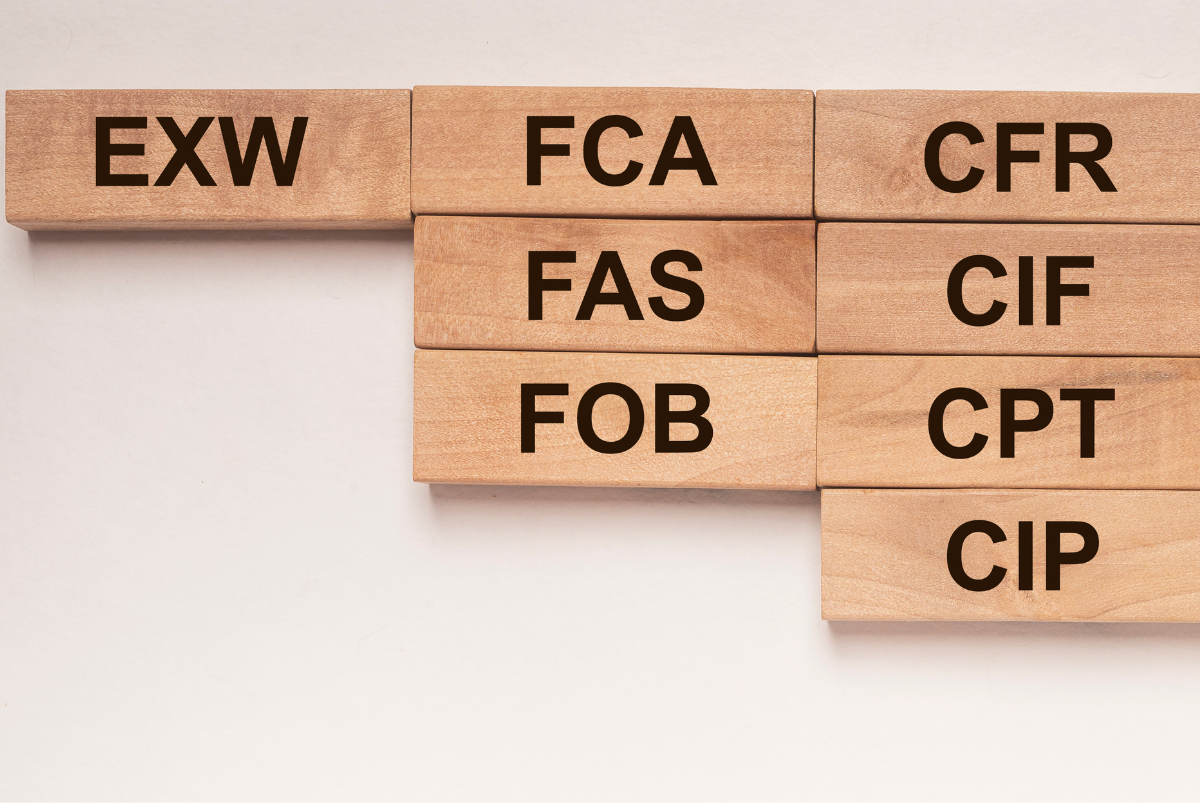
Incoterms, short for International Commercial Terms, standardize trade terms to define the responsibilities and obligations of buyers and sellers in international trade transactions. They specify the allocation of costs, risks, and delivery responsibilities between parties involved in the export process.
What Incoterms cover:
- The obligations of each party i.e., the individual roles played by the sellers and buyers
- The expenses to be borne by the buyers and sellers
- Standardized terminology used by all companies doing international business.
- Classify modes of transport
What Incoterms do not cover:
- Address all the conditions of a sale
- Identify the goods being sold nor list the contract price
- Reference the method nor timing of payment
- The contract between the importer and the exporter governs when ownership of the goods passes from the seller to the buyer, according to the International Chamber of Commerce.
- Specify which documents must be provided by the seller to the buyer
- Address liability for the failure to provide the goods
Common Incoterms used for Foreign Exports:
EXW – Ex Works:
The seller’s responsibility is to make the goods available at their premises or another named place (such as a factory).
The buyer is responsible for all transportation, costs, and risks from that point onward.
FCA – Free Carrier:
The seller delivers the goods, cleared for export, to the carrier nominated by the buyer at a named place or point.
The risk transfers to the buyer once the goods are handed over to the carrier specified by this Incoterm.
FAS – Free Alongside Ship:
The seller is responsible for delivering the goods to a named port of shipment and placing them alongside the vessel nominated by the buyer.
Risk of loss or damage transfers from the seller to the buyer when the goods are placed alongside the ship in accordance with this Incoterm.
The buyer assumes responsibility for the main transportation, freight costs, insurance, unloading, and any further transportation beyond the named port of shipment.
FOB – Free On Board:
FOB is one of the most commonly used Incoterms. The seller delivers the goods on board the vessel at the named port of shipment.
The risk transfers from the seller to the buyer when the goods pass the ship’s rail as defined by this Incoterm.
CFR – Cost and Freight:
Under CFR, the seller is responsible for delivering the goods on board the vessel at the named port of shipment.
Seller covers the costs of transportation to the port of destination and pays for the freight to carry the goods to the named port.
Risk transfers from the seller to the buyer when the goods pass the ship’s rail.
Buyer is responsible for unloading the goods, customs clearance, and further transportation beyond the named port of destination as per this Incoterm.
CIF – Cost, Insurance, and Freight:
Similar to CFR, CIF includes insurance along with transportation.
The seller’s responsibility entails delivering the goods on board the vessel at the named port of shipment.
They cover the costs of transportation to the port of destination, pay for freight, and arrange insurance to cover the goods during transit.
Risk transfers from the seller to the buyer when the goods pass the ship’s rail.
The buyer assumes responsibility for unloading, customs clearance, and any subsequent transportation beyond the named port of destination.
CPT – Carriage Paid To:
The seller delivers the goods to a carrier or another person nominated by the seller at a named place.
The seller is responsible for the cost of transportation to the named destination, but the risk transfers to the buyer upon delivery to the carrier.
CIP – Carriage and Insurance Paid To:
Similar to CPT, but the seller also arranges and pays for insurance to cover the goods during transit.
The risk transfers to the buyer upon delivery to the carrier, and the seller is responsible for insurance until that point.
DPU – Delivered at Place Unloaded:
The seller clears the goods for import and delivers them to a named place where they are unloaded.
The risk transfers to the buyer upon delivery, and the buyer is responsible for unloading.
DAP – Delivered at Place:
The seller delivers the goods, cleared for import, to a named place determined by the buyer.
The seller is responsible for all costs and risks until the goods are ready for unloading at the named place.
DDP – Delivered Duty Paid:
The seller is responsible for delivering the goods, cleared for import and with all applicable duties paid, to the buyer at a named place.
The seller bears all costs and risks until the goods are delivered to the buyer.
The buyer assumes responsibility for the main transportation, freight costs, insurance, and any additional costs and risks beyond loading the goods onto the vessel.
Conclusion:
It’s important to note that while these explanations provide a general understanding of these Incoterms, the specifics of each transaction may vary based on the contract between the buyer and seller. Always refer to the official International Chamber of Commerce (ICC) documentation for complete and accurate details regarding each Incoterm.

Leave a Reply