Introduction:
As 2025 approaches, the industrial manufacturing sector will encounter several new trends defining how we do business. Digital technologies are continuously improving, coupled with evolving consumer demands and global economic shifts, reshaping the manufacturing landscape much faster. For companies eager to compete and remain innovative, understanding and adapting to those emerging trends isn’t just beneficial; it’s also critical for their survival.
We’ve selected the top five industrial manufacturing trends that will change this sector. From human-centric innovations to supply chain transformation, these industrial manufacturing trends will offer opportunities and challenges for manufacturers worldwide.
Ultimately – adaptation is vital here, and by exploring these new developments, we aim to provide insights for businesses to navigate the complex terrain of modern manufacturing and position themselves at an advantage next year.
Industry 5.0 & Human-centric Innovation
2024 marked the start of Industry 4.0. 2025 will see the start of Industry 5.0, which merges technology and human activity. Key aspects of this wave are:
1. Custom Manufacturing:
Industry 5.0 enables customization by combining AI with human insight. The result is a highly personalised product without compromising efficiency.
2. Enhanced Sustainability:
Industry 5.0’s human-centric approach emphasizes sustainability and manufacturing processes are being modernized to be more environmentally responsible.
Example: BMW Implements Collaborative Robots:
BMW’s Spartanburg plant in South Carolina has integrated cobots into various production lines, from applying sealants to installing door panels, to yield these results:
- 5% increased overall productivity
- 70% reduction in ergonomic issues for workers
- Improved product quality via consistent sealant application and precise component installation
- Reshoring and Regionalization
Reshoring to provide greater value to markets:
In the reshoring industrial manufacturing trend, companies moved most of their production processes back to their home countries or closer to their primary markets. The US alone saw a record 364,000 manufacturing jobs announced as a result of reshoring in 2022 driven significantly by:
- Lowered supply chain risks
- More control over production processes
- Faster time-to-market
- Government incentives to support domestic manufacturing
Regarding regionalization, manufacturers adopt a regional approach instead of centralized production in specific locations. This involves setting up production hubs in critical market regions to gain higher flexibility and responsiveness to local demand.
Example: Tesla Expanding to Europe
Tesla’s Germany-based Gigafactory is the best example of regionalization. The move caters to its European market and produces 500,000 EVs annually. Tesla gains by:
- Lowering transport costs and time for their customers
- Further customizing their EV cars to fit European regulations
- Mitigate trade barriers or tariffs
- Making the European leg of their supply chain more resilient
Customization in Steel and Metal Component Manufacturing
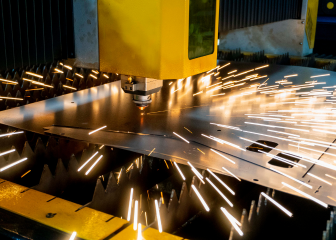
Industry 5.0 further improves the capability to produce customized metal components. Manufacturers are leveraging CNC machining and laser cutting to develop bespoke metal parts to specifications. Some even rely on AI software to enable custom metal component production with complex geometries.
Digitalized Supply Chains for Custom Metal Component Manufacturing
The Digital Twin market in manufacturing will grow from $3.1 billion in 2020 to $48.2 billion by 2026 at a CAGR of 58%, permitting greater simulation and optimization in the production process. Efficient supply chain management is crucial in custom steel and metal component manufacturing to meet the high precision and variability required by custom orders. This can be achieved using AI and Predictive Analytics technologies, which improve demand forecasting and inventory optimization, while blockchain can secure higher transparency and traceability in the metal supply chain.
Example: Siemens Digital Supply Chain Transformation
Siemens integrated AI, IoT, and blockchain technologies to overhaul their digital supply chain platform for efficient custom fabrication management and faster response times. Their metal components division gains by:
- 20% reduction in inventory costs
- 40% improvement in on-time delivery performance
Workforce Transformation and Skills for Custom Metal Component Manufacturing
94% of manufacturing executives believe developing a skilled workforce is critical to achieving Industry 5.0 success. This results in new manufacturing industry trends, where workers must be proficient in advanced manufacturing technologies. There will be a 12% increase in the number of robot installations on average per year from 2022 to 2024, with cobots doing tasks like welding or metal cutting while human workers focus on fine-tuning designs and ensuring product quality.
Example: The LEEPS program from Lincoln Electric
Lincoln Electric set up its LEEPS (Lincoln Electric Education Partner Schools) program to further state-of-the-art equipment and curriculum for welding education. The program enables welding training for students.
As 2025 approaches, companies are investing in the right approaches to better their business. What are you doing to stay ahead? Contact rivexa today.

Leave a Reply