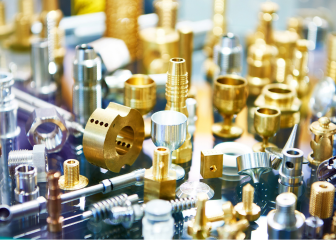
The production of metal parts is a fundamental aspect of industrial manufacturing, playing a critical role in producing components for a wide range of uses, including automotive, aerospace, consumer electronics, and medical devices. At rivexa, we focus on providing top-notch custom metal components that are customized to fit our clients’ exact requirements. In this extensive manual, we will delve into the complex realm of producing metal parts, discussing both fundamental and advanced methods.
Exploring Metal Parts Manufacturing
In the process where metal parts are made, they turn raw metal into final pieces through various processes. They use conventional methods like casting and forging and also advanced processs like CNC machining and Additive Manufacturing. The technique selected depends on what the part needs in terms of how big it is, its shape, material and the specific features it must have.
Key Processes in Metal Parts Manufacturing
- Fabrication
- Casting
- Forging
- CNC Machining
- Additive Manufacturing (3D Printing)
Benefits of Custom Metal Parts Manufacturing
- Design Flexibility:
- Designing custom metal parts to meet specific requirements enhances performance and integration.
- Advanced tools like CAD software and 3D printing enable quick iterations and refinements, reducing time-to-market.
- Material Selection
- Clients can choose from a wide range of metals, including aluminum, steel, titanium, and more.
- Material properties can be matched to the specific needs of the application.
- Precision and Quality:
- Advanced manufacturing techniques ensure high precision and quality.
- Custom parts undergo rigorous testing and inspection to meet stringent standards.
The Metal Parts Manufacturing Process:
The metal parts manufacturing process involves several stages, each critical to achieving the desired outcome.
- Design and Prototyping:
- Begins with the creation of detailed designs and prototypes.
- CAD software and 3D printing are commonly used for rapid prototyping.
- Material Selection:
- Choosing the appropriate metal based on the part’s requirements.
- Considerations include strength, weight, corrosion resistance, and cost.
- Production:
- Involves the selected manufacturing process (casting, machining, etc.).
- Each process has its specific steps and quality control measures.
- Finishing:
- Includes treatments such as heat treatment, coating, and polishing.
- Enhances the part’s properties and appearance.
- Inspection and Testing:
- Rigorous testing to ensure the part meets all specifications.
- Non-destructive testing methods like X-ray and ultrasonic inspection may be used.
The rivexa Advantage:
At rivexa, we take great pride in our expertise in metal parts manufacturing. Our comprehensive approach includes:
- Verified Manufacturer Onboarding: We collaborate with manufacturers specializing in custom product production. Our team that handles supplier onboarding meticulously evaluates suppliers, which includes conducting factory audits, to guarantee adherence to our strict criteria.
- State-of-the-art technology: Utilizing the most current tools and methods to create accurate and top-notch components.
- rivexa expert team: Skilled engineers and technicians make up our expert team with a commitment to excellence, providing assistance throughout the sourcing journey.
- Tailored solutions: We customize every project to align with the unique requirements of our clients, suggesting manufacturers who have the necessary expertise for the specific project.
- Quality Control: Enforcing strict measures for quality assurance to guarantee each part meets top standards.
Conclusion:
Producing metal parts is a complex and detailed field that requires a thorough understanding of materials, methods, and design principles.
rivexa delivers top-notch solutions for custom metal parts fabrication and small metal parts manufacturing. We help our clients achieve their goals in industrial manufacturing by emphasizing accuracy, excellence, and meeting customer needs.

Leave a Reply