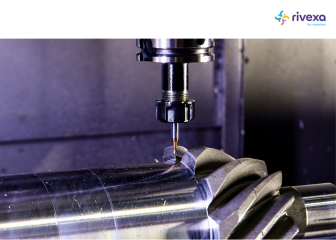
China has made progress in fields like AI, solar energy, and semiconductors but appears unable to do the same for high-end conventional CNC machining tools. Beijing has implemented several initiatives to achieve technological independence. It still heavily relies on foreign suppliers for advanced tooling systems for use in automotive production, aerospace, and electronics manufacturing.
The Financial Times reports that this persistent gap in CNC machine tools capabilities represents a substantial hurdle in China’s broader industrial development strategy. Chinese manufacturers have successfully established dominance in the lower and middle segments of the market. The premium high-precision CNC systems remain largely controlled by German, Japanese, and American custom CNC machining manufacturers.
Role of Advanced CNC Machine Tools
High-accuracy conventional CNC machining tools constitute vital technology in modern production environments. They enable manufacturers to craft complex parts with superior speed and precision for a spectrum of industries that range from military applications to everyday electronic products. Top-quality CNC systems, with their requirements for uncompromising precision and reliability, are of special importance in mission-critical sectors such as aerospace and semiconductor manufacturing.
Today, veteran international manufacturers – Germany’s Siemens and Japan’s Fanuc – maintain control over the high-end sector. They leverage their long-term industry presence and technical capabilities, which have been refined over generations. According to Xiao Feng, an industrial sector analyst at CLSA, mastering advanced CNC tooling technology presents ‘probably the last quandary for China’s manufacturing sector.’
China’s CNC Machine Tool Sector: Progress and Challenges
China has established its market leadership in basic and intermediate conventional CNC machining equipment. It has leveraged its mass production capabilities and cost advantages. When it comes to high-accuracy systems, Chinese producers continue to struggle owing to technological gaps in complex mechanisms and unified software platforms.
A major drawback for Chinese custom CNC machining manufacturers is market perception and demonstrated reliability. Premium CNC machinery represents a big capital investment, making industrial customers reluctant to adopt relatively untested brands. The challenge can be compared to ‘trying to sell a computer with a homemade operating system’ in a marketplace where established names like Siemens and Fanuc have the upper hand.
What Else is Adding to China’s CNC Technology Woes
Industry metrics from the China Machine Tool and Tool Builders’ Association show a 5.2% reduction in annual revenue for 2024. Figures declined to 1 trillion Yuan (USD 138 billion), while profits fell by 76.6% to 26.5 billion Yuan. This decline comes from decreasing profit margins and intensified price competition in lower-value segments, limiting funds available for development.
Relying on external technologies
China has yet to develop the necessary proprietary technologies for high-performance CNC systems. These machines require cutting-edge control software and high-precision engineering skills that remain beyond the reach of Chinese manufacturers.
Changing strategic priorities
While Beijing initially designated machine tools as a critical area for technological independence within its ‘Made in China 2025’ plan governmtn support was redirected to other areas. These other areas include robotics and semiconductor fabrication – sectors offering more visible short-term results. Industry analysts indicate that this redirection of resources has limited sustained investment in CNC innovation.
Established market leadership
The global market for premium CNC tooling is highly concentrated, with Siemens and Fanuc jointly holding around 70% of the high-end segment. Their well-established software platforms and accumulated technical knowledge create big hurdles for emerging competitors. This concentration had created hurdles for new entrants attempting to set up any competitive online CNC machining service in this premium segment.
Economic pressures and sector contraction
China’s CNC manufacturing sector has experienced financial difficulties, with prominent domestic custom CNC machining manufacturers, including Dalian Machine Tool and Shenyang Machine Tool, seeking bankruptcy recently. Though some firms were acquired by state-owned enterprise Genertec, these financial disruptions have limited research and development investments.
Economic Costs of China’s Technical Gap
China’s dependency on imported high-performance conventional CNC machining equipment creates notable vulnerabilities as global political tensions and export limitations increase. This shortfall affects the nation’s industrial goals. The nature of dependability in CNC equipment is critical.
Industrial customers or buyers prefer reliable equipment over potentially problematic online CNC machining service options from untested providers. Renaud Anjoran, Sofeast CEO, highlights that even slight operational failures can lead to bigger manufacturing setbacks. The reluctance among industrial customers to adopt relatively untested Chinese alternatives further extends China’s issues with getting a foothold in this manufacturing sector.
India as an Alternative CNC Machining Partner
Companies seeking to diversify their supply chains can find a compelling option in India. The country offers a developed CNC tooling infrastructure with certified custom CNC machining manufacturers. You can access to skilled technical workers and growing governmental backing for advanced manufacturing operations.
rivexa can help global buyers find verified Indian manufacturing partners and set up the ideal online CNC machining service for sourcing industrial components. Our verified manufacturers deliver custom parts with efficient production timelines.
Interested in learning how our online CNC machining service can provide better procurement alternatives? Contact us now for more information on how Indian manufacturers can fulfill your tooling requirements.

Leave a Reply