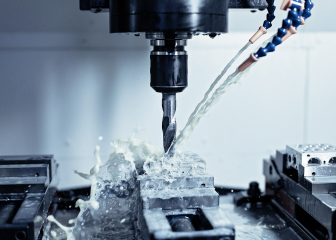
Every factory floor works best when the flow of tools, parts, and materials never stops. An Industrial Product Supplier plays a key role in making that happen.
Part of their work is making sure supplies show up when they’re needed and match the quality expected. Sometimes it’s urgent parts for a repair, other times it’s routine stock that keeps the floor running.
When this happens consistently, machines keep working, quality stays high, and the workplace remains safe for everyone. Without it, even the most advanced machines and skilled teams can come to a halt. To achieve this, the role covers several key areas.
Role of an Industrial Product Supplier
Core responsibilities of industrial product supplier include:
Equipment provision
Supplies heavy machinery, precision components, and spare parts critical to manufacturing and maintenance.
Expert consultation and customization
Advises on technical fit, tailor solutions to project needs, and supports design and specification.
After-sales support and maintenance
Gives technical help, supplies spare parts, and carries out service to keep machines in good condition.
Innovation and training
Brings the latest machinery innovations and provides training so client workforces can maximize performance and efficiency.
Supply chain integration
Looks after overseas shipping, handles customs checks, and keeps deliveries on time.
Sustainability compliance
Supports businesses in meeting environmental rules by offering eco-friendly machinery choices.
When managed effectively, production runs without delays, expenses stay in check, and quality remains consistent.
That’s why choosing where and how you source matters—and why many buyers are now looking closely at India.
Benefits of Sourcing from India
You don’t always find the right products nearby. Many buyers have started looking to India, where skilled makers offer good quality at prices that work.
Buyers in different regions are also noticing the consistent quality coming from its workshops and factories.
Let’s look at some key advantages below:
Cost-effectiveness
India’s manufacturing labor costs are up to 70% lower than China’s, offering major savings—critical when landing heavy equipment affordably. (Gembah)
Strong scale and growth
India’s exports hit $824.9 billion in 2024-25, with 6.01% increase over the previous year’s figure. (DD News)
Quality and certifications
Indian suppliers increasingly meet ISO and global compliance standards while investing in advanced production methods like CNC machining.
Skilled workforce and innovation
Produces 1.5 million engineering graduates annually; R&D spending is doubling, with private firms leading. (Business Standard)
Flexible, scalable supply ecosystem
Clusters in places such as Pune for auto parts and Bengaluru for electronics can handle both small runs and large orders with consistent results.
Government incentives and improved ease of business
PLI schemes offer billions in incentives. SEZs offer tax breaks, and online systems make approvals faster. The country has also moved up sharply in global ease-of-doing-business ratings.
It covers the main needs for buyers looking for sourcing that is strategic, affordable, and ready to grow. That said, global buyers also value transparency—here’s why it matters.
Importance of Supply Chain Transparency
Being open about how products are made and moved is now expected. Buyers want to know what happens from the first step of getting materials right through to the moment goods arrive.
Why transparency matters:
Customer assurance:
Buyers now want facts, not faith, on safety, sourcing, and sustainability to buy confidently.
Brand trust and loyalty:
Shared provenance builds loyalty. Improving retention by as much as 25–95% boosts long-term margins. (qimaone)
Stronger partnership with an Industrial Product Suppliers:
Open reporting encourages honest industrial product supplier communication and joint quality improvement.
Competitive edge and industry improvement:
Transparent sourcing sets new standards and helps raise industry-wide ethical and quality benchmarks.
A clear plan is needed to achieve this level of openness, and that’s where practical actions come in.
Tactics for transparency:
- Real-time data sharing across suppliers and buyers
- Standardized audit and inspection processes
- Full supply chain mapping beyond tier-1 suppliers
- Supplier scorecards and metrics for performance tracking
Transparency builds trust, value, and resilience. But buyers need verification too—this is where rivexa elevates sourcing.
rivexa’s Industrial Product Supplier Verification Process
Buyer confidence starts with strict checks. rivexa uses a tech-enabled process to verify every supplier.
Each industrial product supplier is checked for skills, standards, and trustworthiness before joining.
By blending structure, technology, and human review, rivexa makes sourcing transparent and trustworthy.
Here we see verification steps:
Onboarding & documentation
Suppliers register and submit credentials, certifications, and compliance documents via rivexa’s portal.
Supplier and production audits
Digital tools and third-party inspection partners validate technical capability and QC processes.
Compliance & profiling
Checks include ISO, environmental, labor standards, and alignment with international regulations.
Real-time tracking and performance scoring
Suppliers are monitored via dashboards, metrics like delivery, quality, and communication feed into ongoing assessment.
Continuous improvement & human touch oversight
Periodic reviews are paired with relationship management to ensure adaptation and reliability remain constant.
Key Takeaways
Strategic industrial product supplier partnerships are essential for operational continuity as they ensure certain factors that keep production running smoothly.
India offers compelling sourcing advantages with significant cost savings, government incentives plans, recognized quality standards and more.
Supply chain transparency builds competitive advantage and customer trust through real-time data sharing, standardized audits, full supply chain mapping, and supplier scorecards.
Together, these steps make rivexa the Reliable Co-Pilot—ensuring industrial product supplier credibility with agility, personalization, and scale.
rivexa combines cutting-edge verification with human insight to make sourcing from India realistic, strategic, and frictionless.
Industrial product sourcing from India is no longer just feasible. It is competitive, scalable, and built on trust—ready to unlock prosperity for global businesses.

Leave a Reply