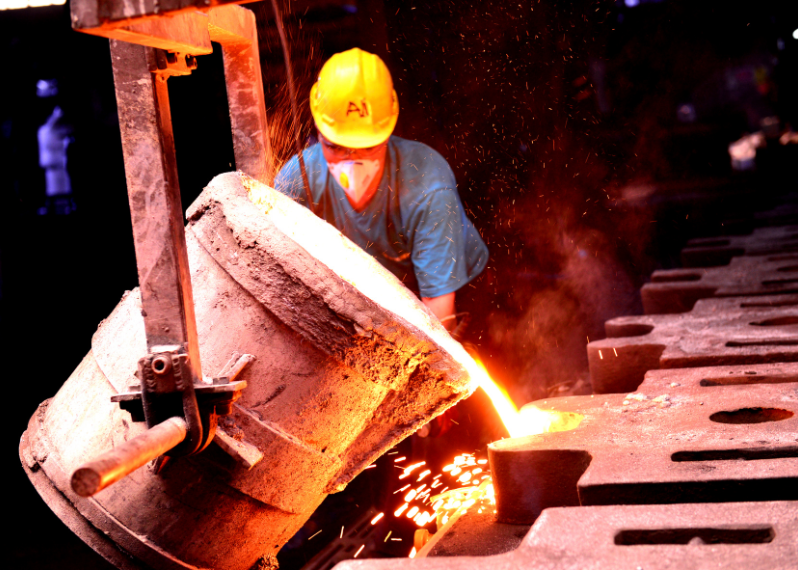
Key Takeaways: The trial-and-error approach in custom metal casting can lead to high rework rates, wasted tooling, and delayed deliveries.
DFM at the drawing stage improves manufacturability, lowers scrap, and ensures alignment with the vendor.
rivexa embeds engineering feedback before quoting, so buyers can avoid surprises and accelerate market integration.
Anyone can send you a quote. But how many will actually deliver what they promise? In custom metal casting, the real cost isn’t in the RFQ. It’s in the redo. Too often, buyers receive a quote, issue a PO, and then spend weeks untangling mismatched tolerances, tooling changes, or parts that fail inspection. That “competitive” quote? It ends up being a time sink, a budget hole, or both in complex custom metal casting workflows.
The problem isn’t the casting process, it’s the lack of manufacturability alignment at the drawing stage. While trial-and-error during sourcing may work for off-the-shelf components, it fails for custom metal castings where tooling is expensive and lead times are tight.
That’s why smart buyers work with rivexa. Before a single tool is built, we validate your design, align expectations with vetted foundries, and flag risks early – so your quote is actually production-ready.
The Hidden Cost of Trial-&-Error Sourcing of Custom Metal Casting Components
When sourcing custom metal casting, the upfront quote often looks clean. But, what happens after the PO is issued can turn into a slow-motion cost overrun. Without a DFM review in place, buyers are essentially greenlighting tooling before confirming that the design actually becomes castable. Here’s where things become complicated.
Tooling: Expensive to Begin With, Costlier to Redo
Tooling for sand or investment casting isn’t pocket change. A single core box or wax die can run into thousands of dollars. When post-order design flaws like missing draft angles or misaligned parting lines show up, those tools often need rework or complete replacement. That’s more than just an additional cost. It’s 2 to 4 weeks lost in the pattern shop.
Rejections, Rework, and the QA Loop
In custom metal casting, even minor dimensional flaws can result in high scrap rates. It’s not uncommon for first-article parts to come back with dimensional inconsistencies, porosity, or surface defects. At that point, you’re already in reactive mode – burning time on re-machining, sorting, or even re-casting. Each loop through QA consumes internal bandwidth and increases unit cost.
Delays That Cascade Across the Supply Chain
Without DFM-backed sourcing, mismatches between design intent and foundry capability show up late, when the delay is hardest to fix. These slips cascade into missed customer deliveries, production disruptions, and sometimes even SLA penalties. What looked like a fast procurement now becomes a reputational and operational liability.
The Smart Way: DFM at the Drawing Stage of Custom Metal Casting
Successful custom metal casting projects begin on the drawing board, not at the foundry. Smart buyers know that locking design and vendor alignment before the PO is what drives efficiency. Therefore, the recommended approach is to focus on DFM at the drawing stage.
1. Spot Issues Before They Cost You
A DFM review at the drawing stage means experienced engineers scrutinize your model or 2D drawing for features that could cause trouble during custom metal casting, including thin walls, sharp corners, poor gating access, or complex undercuts. These are red flags that might not show up in a quote but will almost certainly show up on the shop floor.
2. Real-World Tolerances, Not CAD Idealism
Designs often carry tight tolerances or unrealistic surface finish expectations that don’t align with the custom metal casting method or tooling used. rivexa’s DFM review calibrates these tolerances to actual shop-floor capabilities, saving buyers from costly rejections and unnecessary machining operations.
3.Tweaks in Material and Geometry That Pay Off
Sometimes, switching to a more cast-friendly alloy or modifying a boss or rib can reduce core complexity, improve yield, and speed up tooling. These small changes can greatly enhance the castability of complex custom metal casting components.
4. Alignment Speeds Up the Process
When vendors are looped in early and DFM adjustments are buyer-approved, tooling starts faster, trials go smoother, and first-article success becomes the norm.
How rivexa Builds DFM into the Sourcing Process
At rivexa, we integrate DFM into the sourcing process. In traditional sourcing workflows, too many projects fall apart after the PO is issued because key manufacturability questions weren’t addressed early. Our sourcing process solves this through a structured, engineer-led DFM workflow that complements the design intent with the realities of actual production before anything goes to tooling.
Step 1: Drawing Submission
The process begins when a buyer uploads a 2D drawing, a 3D CAD file, or both. Within 24 to 48 business hours, rivexa’s in-house engineering team performs a full DFM analysis of the part. Unlike generic sourcing platforms that auto-generate quotes based on superficial dimensions, rivexa dives deeper, looking at:
- Uniformity of the thickness of the wall
- Fillet radii and transitions that could lead to stress concentrations
- Draft angles for pattern removal
- Feasibility of tolerance feasibility based on the casting process and material
- Suggested gating and riser zones
Each part is evaluated with the lens of cost, castability, yield, and post-processing effort. This ensures that each custom metal casting design is assessed for both cost-efficiency and manufacturability.
Step 2: Design Iteration with Buyer Involvement
What sets rivexa apart is the closed-loop collaboration with the buyer. Once initial feedback is ready, it’s shared with annotated visuals, design suggestions, and potential simplification opportunities. Instead of forcing buyers to “go figure it out” with another designer, our engineers walk them through the reasoning behind every proposed change.
Design iterations often cover:
- Replacing high-cost features (deep pockets, sharp internal corners) with more mold-friendly alternatives
- Adjusting tolerances to fit standard shop-floor capabilities
- Reorienting parting lines or draft directions to avoid complex tooling
- Reducing the number of sand cores required
Our engineers finalize the geometry in tandem with process requirements, thereby de-risking manufacturing before the PO is even placed. This collaborative process is vital to refining your custom metal casting geometry before it hits production.
Step 3: Vendor Matchmaking and Finalizing Quotes
After the design is finalized, rivexa works with its vetted network of Indian foundries to confirm the exact process fit. Vendors are chosen based on alloy, process (sand, investment, or die casting), volume, and required certifications.
Only once vendor alignment is complete do we generate a final quote, covering tooling, price of parts, timeline, and QC plan. This means no scope of tooling rework creeps in later. You get exactly what’s quoted, delivered as promised.
This structured DFM-first approach is not just about engineering, but about efficiency, predictability, and trust.
Comparing the Trial-&-Error vs. DFM-First Approach
When it comes to custom metal casting, choosing a DFM-first model is no longer a luxury, it’s a necessity.
| Criteria | Trial-and-Error | DFM-First with rivexa |
| Time to Final PO | 4 – 6 weeks | 1 – 2 weeks |
| Rework Risk | High | Low |
| Cost Predictability | Prro | High |
| Quality Assurance | Reactive | Proactive |
In custom metal casting, trial-and-error doesn’t just cost money. The problem lies in lost lead time and confidence for buyers. There’s little room for misalignment when you work with tight production windows and demanding specifications.
That’s why design for manufacturability isn’t an optional step. It’s a high-ROI move. With rivexa, you can review designs before committing to tooling, thereby cutting out rework, reducing delays, and setting clear expectations across the supply chain.
rivexa builds DFM into the sourcing process from day one, so your custom metal casting program starts strong and stays on track. Upload your part drawing today for a no-cost manufacturability review and get a quote that’s grounded in real production insight.

Leave a Reply