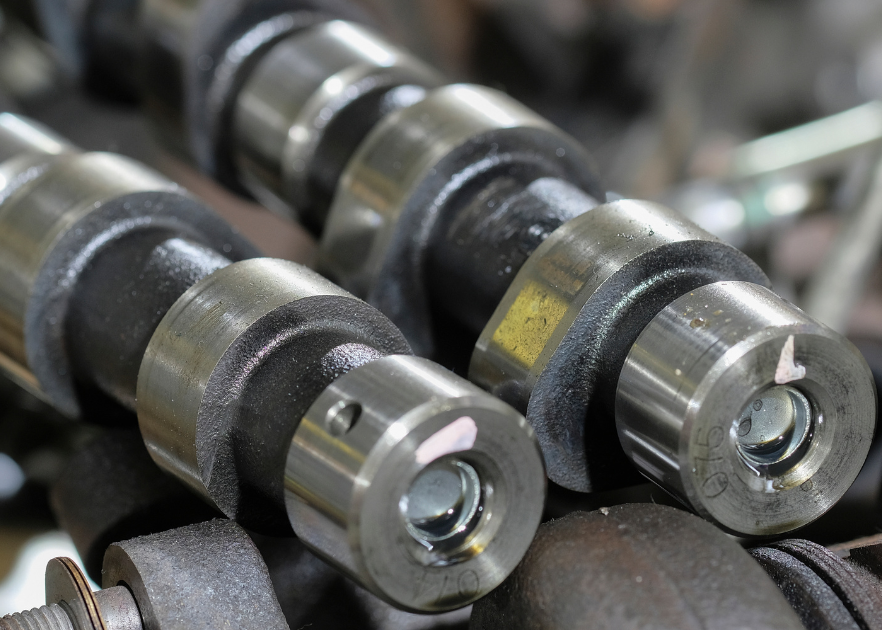
Key Takeaways: Camshaft manufacturers for industrial engines focus on DFM principles during investment casting to avoid cracks and dimensional errors.
rivexa provides support when looking for Indian camshaft manufacturers for OEMs, expert DFM reviews, and foundry matchmaking for consistent, high-quality parts.
India offers verified camshaft manufacturers in India with AS9100/ISO-certified foundries, ideal for mid-volume precision casting projects.
Investment casting is revered for its precision, with several camshaft manufacturers for OEMs preferring this process to fulfill your design demands. The results are finer detailing, tighter tolerances, and smoother surface finishes – qualities hard to achieve with other casting methods. But with that precision comes zero tolerance for error in design. This precision is crucial for camshaft manufacturers for industrial engines, where tolerances directly impact engine performance.
A complex part that looks perfect in CAD might result in porosity, dimensional deviations, or shell breakage on the shop floor if critical DFM principles are missed early on. Shrinkage factors, draft angles, thin walls, and gating design aren’t just technicalities; they’re make-or-break parameters for yield and cost.
According to studies, a significant part of new casting jobs face rework or rejection due to avoidable design flaws. At rivexa, we believe those losses are optional. This is especially critical when working with verified camshaft manufacturers in India who specialize in precision casting.
In this blog, we break down common design pitfalls, explain why DFM is non-negotiable for investment casting, and show how rivexa helps global buyers get castings right, especially when sourcing from India.
Why Camshaft Manufacturers use DFM
Before Indian camshaft manufacturers for OEMs being tooling, the design must be solid, particularly for investment casting, where every detail matters. Here’s why:
1. Intricacy of Wax Pattern
The wax pattern, which defines the heart of the process, is fragile. Thin walls and sharp corners are prone to damage during handling or shell application. A minor design simplification, like filleting edges or adjusting wall thickness, can dramatically enhance yield and pattern life.
2. Strength of the Ceramic Shell
The durability of a ceramic shell depends on uniform wall thickness and predictable geometry. Wall variations or abrupt changes can cause cracking or shell delamination during build-up or burnout. Consistency in the CAD model means reliability in the foundry.
3. Cooling, Shrinkage, and Solidification
Metals like stainless steel or super alloys shrink as they solidify and cool. So, it’s essential to address shrink rates and solidification paths in CAD before tooling. If not, you risk dimensional errors or internal defects in your final cast.
4. Predictable Design Implies Fewer Defects
As complexity increases, so does the chance of defects exponentially. Even small deviations in a fine-detail feature can lead to major rejects. A DFM-led review identifies these early and ensures predictable outcomes.
Common DFM Errors in Investment Casting
Investment casting offers exceptional precision, but only if the design respects its exacting parameters. Missteps here don’t just result in scrap. They’re costly delays waiting to happen. Here are some of the common DFM errors to avoid in investment casting.
Thin Sections with No Fillets
Thin walls or sharp corners may look fine in CAD, but during shell burnout or cooling, they often crack or break. Adding fillets at corners and maintaining a minimum wall thickness helps preserve both wax and ceramic integrity, reducing failure points.
No Draft in Internal Cavities
Details like undercuts and internal pockets can trap the ceramic shell without a proper draft angle. Wax removal becomes challenging, and the brittle shell often cracks under stress. That’s why, it’s recommended to include a 1° to 3° draft for clean ejection and integrity through casting.
Ignoring Shrinkage Allowance
Metals naturally shrink on solidifying, the exact extent depending on alloy and geometry. Without compensating patterns, your final parts can miss critical tolerances, forcing costly rework or redesign.
Poor Gating Allowance
Incorrect gating design, like undersized runners or gates in the wrong location, can cause turbulence, cold shuts, or porosity. Metal must flow smoothly, enter thick sections first, and feed continuously until full solidification.
Therefore, it’s crucial to address these key areas early to simplify your design when working with camshaft manufacturers for industrial engines.
How rivexa De-risks Investment Casting Orders
Camshaft manufacturers for industrial engines prefer investment casting delivers outstanding dimensional accuracy and finish and leaves little room for design error. At rivexa, we work hands-on with both buyers and foundries to ensure that every order is set up for success, not surprises.
1. Early Design Feedback, Before the PO
Before tooling begins, our engineering team conducts a full DFM review of your 3D files and technical drawings. We flag issues like undersupported thin walls, tight tolerance clashes, or surface finishes that don’t align with casting capabilities. This early feedback helps you refine your design while also helping the foundry quote accurately, saving time and cost later in the process.
2. Real-Time Support
For high-stakes components – especially in defense, energy, or aerospace applications, rivexa’s verified camshaft manufacturers for OEMs run flow simulations and gating system optimization. These insights help avoid defects like shrinkage cavities or cold shuts, especially in complex geometries. You’re not guessing, you’re working with validated data before pouring a single drop of metal.
3. Supplier Fit, Not Just Availability
We don’t route your order to just any vendor. Instead, we match your design with verified camshaft manufacturers in India based on:
- Required material (SS316, Inconel, brass, etc.)
- Surface finish expectations (as-cast, polished, shot-blast)
- Production volume and tolerance class
Our selection is guided by detailed insights, not guesswork.
4. Dimensional Control and Compliance
Before any parts leave the foundry, rivexa ensures:
- Material grade is verified using spectrometer
- Critical dimensions are checked with CMM
- A complete dimensional layout is shared for your QA tea
| Criteria | rivexa | Typical Agent |
| DFM Feedback | Done by engineers at pre-RFQ stage | Rare or generic |
| Vendor Vetting | ISO/IATF-certified + audited manufacturers | Often unverified |
| Simulation Support | FEA, flow, & mold simulation for cast/molded parts | Not included |
| QC Coverage | Spectro + CMM + Layout + 3rd party inspection reports | Visual checks only |
With rivexa, you’re not just getting a quote, you’re gaining a sourcing partner who understands that precision starts long before production.
Why Global Buyers Use India for Investment Casting
Global buyers increasingly turn to India not just for cost savings, but for precision, compliance, and flexibility.
1. Lower Tooling Costs
Indian camshaft manufacturers for OEMs offer lower tooling costs compared to the EU or the US, making it ideal for complex part development without inflating upfront budgets.
2. Certified Foundries for Critical Industries
Access to verified camshaft manufacturers in India compliant with AS9100, ISO 9001, and IATF 16949, which are suitable for aerospace, defense, automotive, and energy-grade parts, is a crucial advantage.
3. Mid-Volume Specialization
Indian job shops excel at 500 to 10,000 unit production runs – this is how most camshaft manufacturers for industrial engines can offer greater flexibility and quicker changeovers for varied SKUs.
4. Engineering Access on the Ground
India-based engineering and vendor coordination help global buyers resolve tolerance issues, surface finish requirements, and design clarifications in real-time, especially when working with camshaft manufacturers for industrial engines.
5. Lead Time Advantages via Pre-PO DFM
When DFM is handled upfront, as rivexa does, there’s no post-tooling backtracking, reducing lead times by 1 to 3 weeks for many programs.
Precision Starts Before the Pour – Upload Your File for DFM Feedback
Investment casting offers incredible dimensional accuracy, but only when backed by thoughtful design and manufacturing alignment. It’s not just a precision process. It’s a precision partnership.
At rivexa, we ensure your part is shop-floor ready before the first wax pattern is made. Our team of engineers and certified foundry partners work in sync to catch red flags early and avoid costly mid-production surprises.
Upload your CAD file or drawing today, and get DFM-informed feedback from our camshaft manufacturers for OEMS that transforms your design intent and casting reality.
Let rivexa help you turn complexity into consistency, right from the start.

Leave a Reply