Key Takeaways
Ignoring manufacturing capacity tests can result in modification, increased expenses, and missing deadlines.
Early DFM input, provided by qualified export-grade custom industrial goods suppliers, help simplify production, avoid surprises, and improve supplier response.
Aligning design with process limits boosts success rates—especially when sourcing from verified custom industrial goods suppliers in India.
Your CAD design looks perfect. It’s performance-engineered, meets all practical requirements, and has flawless looks. Then it hits the shop floor, and production either slows down or stops altogether.
Suddenly, tolerances are too tight. A cavity is too deep for the tooling available. Or maybe your beautiful corner radii are causing extra tooling costs. The supplier calls back with revisions, delays, or rejections. That’s where Design for Manufacturing (DFM) steps in.
DFM is more than a set of rules—it’s a strategy. It fills the gap between what your vendor is capable of creating and what your workforce designs. When done correctly, it makes the sourcing process seamless. When done incorrectly or disregarded, it creates ambiguity, waste, and risk.
And for global buyers working with verified custom industrial goods suppliers in India, rivexa exists to make sure your designs don’t just look great—they get built right.
This article will walk you through the real-world impact of DFM, how different processes require different checks, and how rivexa helps ensure your parts are designed right, built right, and delivered on time.
Let’s start by looking at what usually happens when DFM is an afterthought.
What Happens When DFM Is Overlooked?
It is not a part of your design-to-source workflow. You approve a drawing and send it out. Days later, feedback rolls in:
Prototypes are rejected.
This is because the design can’t be machined or cast as is. It might have deep pockets a standard tool can’t reach or features that require five setups instead of one.
Tooling gets delayed.
Why? Because a small oversight in geometry—like missing radii or abrupt transitions—requires a custom tool or jig to be designed from scratch.
Costs balloon during production.
What was quoted for 10,000 parts now needs more machine time, extra operators, and added post-processing—none of which were in the original plan.
And the worst part?
It’s a setback for both parties. As a buyer, you’re stuck waiting. The supplier needs to find alternate resolutions. This is rarely an issue if early manufacturability checks are done and if you work with verified custom industrial goods suppliers in India.
Ignoring DFM creates a ripple effect across your sourcing journey—from quoting to delivery. But the good news? Every one of these issues is preventable.
But, what exactly is DFM?
What Is DFM, and Why It’s a Smart Move
Design for Manufacturing is the process of designing parts with their actual production methods in mind. It ensures your part isn’t just functional—it’s manufacturable, cost-efficient, and scalable.
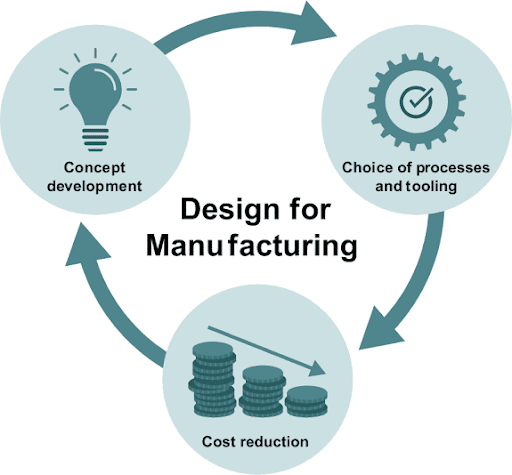
This isn’t just theory. According to Siemens and Geomiq, around 70% of a part’s production cost is fixed at the design stage. That’s why smart buyers bake DFM principles into the drawing, not after the first prototype fails.
Here’s how DFM changes the game:
It takes a holistic view:
Can your design be machined, cast, or welded efficiently? Are you using materials and tolerances that your vendor’s machines can handle without extra setups or special tooling?
It encourages collaboration:
Instead of a transactional RFQ where suppliers just quote what you send, DFM promotes open communication. Suppliers suggest tweaks. You optimize together.
It boosts repeatability and yield:
When parts are easier to make, they’re made faster, with fewer rejects, and tighter process control.
In short: DFM isn’t about dumbing down your design. It’s about aligning it with real-world constraints, so that you get what you expect—without delays or drama.
Now let’s talk about implementation. Having a great DFM strategy is one thing. Making sure your suppliers actually understand and apply it? That’s where rivexa steps in.
DFM Benefits Through rivexa’s India Manufacturing Network
When sourcing through rivexa’s India-based online marketplace for custom industrial goods suppliers, DFM becomes a built-in advantage, not a bolt-on fix.
Here’s how:
Pre-audited vendors:
rivexa partners only with verified custom industrial goods suppliers in India trained to understand DFM principles. They don’t just quote—they flag risks, recommend changes, and align capabilities with your design.
Design tweaks based on capability:
For instance, VMC machines have practical limits. Requesting a 5:1 depth-to-diameter ratio will frequently result in disruption, deformation, or damaged parts. Top-rated export-grade custom industrial goods suppliers will flag these limits before production begins.
GD&T Expertise:
rivexa’s verified custom industrial goods suppliers in India help align your Geometric Dimensioning and Tolerancing with what’s feasible. Specifying ±0.005 mm when ±0.1 mm will do? That’s a cost sink. verified custom industrial goods suppliers in India help buyers tune it to match real shop-floor tolerance bands.
By embedding vendor capability feedback right into your sourcing loop, rivexa makes sure your design not only looks good but works seamlessly in production.
And once your design is aligned with real-world capabilities, it’s equally important to tailor it to the specific process you’re using—because that’s where most sourcing errors begin.
Common Process-Specific DFM Mistakes
DFM isn’t one-size-fits-all. Every manufacturing process has its own quirks—and its own set of traps.
Here’s what trips up sourcing:
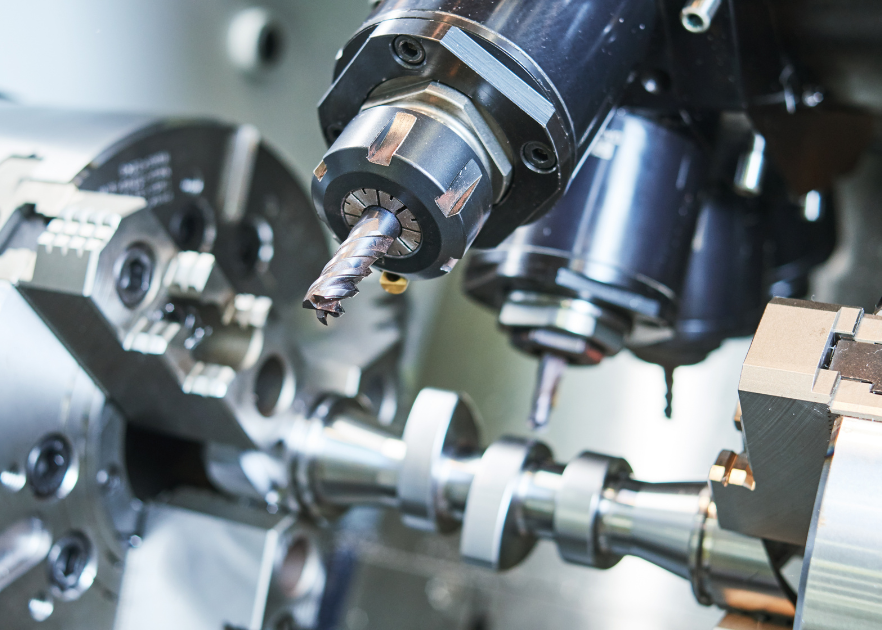
1. CNC Machining
Mistake:
Designing tight tolerances on every feature.
Why it fails:
You drive up cost, increase inspection time, and might not even need that level of precision. This is a mistake even seasoned buyers make – and can be prevented when sourcing through verified custom industrial goods suppliers in India.
What to do instead:
Apply tolerance only where function demands it. Use generous radii, avoid deep cavities (>3:1 depth-to-tool ratio), and add fillets to prevent tool wear.
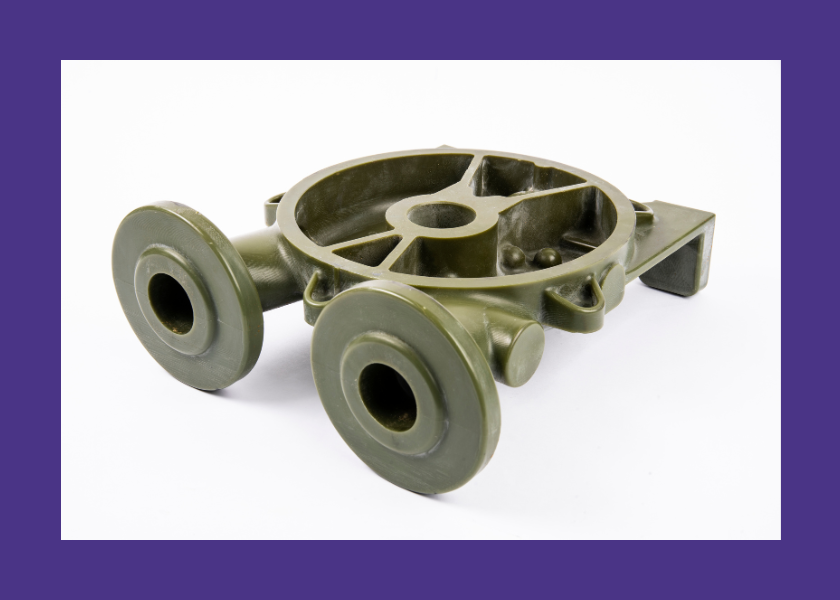
2. Investment Casting
Mistake:
Ignoring draft angles or fillets on core features.
Why it fails:
The part sticks to the die, causing cracks, distortion, or poor release. This is a costly oversight that export-grade custom industrial goods suppliers know to correct.
What to do instead:
Add 1–3° draft on vertical walls, round all internal corners, and maintain uniform wall thickness to prevent shrinkage defects.
3. Fabrication
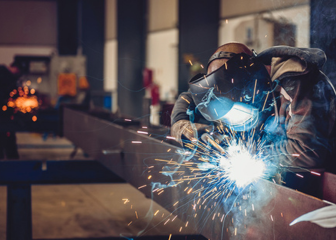
Mistake:
Designing assemblies with no clearance.
Why it fails:
Weld distortions and tolerances add up—your components don’t fit or require grinding and rework.
What to do instead:
Allow at least 1–2 mm assembly clearance, design for jigging, and specify weld order where necessary.
These fixes may sound small—but they often cut days off production time and prevent cost surprises later. Here’s where most sourcing platforms stop. But rivexa doesn’t just connect you to vendors—it aligns your design with their capabilities.
rivexa’s Role in Closing the Design-Manufacturing Gap
Here’s how rivexa’s verified custom industrial goods suppliers in India play a crucial role in closing the Design-Manufacturing Gap:
1. Engineer review + vendor feedback:
Every RFQ sent through rivexa includes a design review. Our team, along with suppliers, provides a quick DFM analysis—flagging high-cost features, impossible specs, or tooling risks.
2. Transparent feedback loop:
You’re not left wondering why something failed. The rivexa custom industrial goods suppliers channels back specific vendor notes, photos, and recommendations so you can make an informed adjustment.
3. DFM baked into the RFQ:
This isn’t an extra step. It’s part of the quoting journey. By the time you receive your quote, the design has already been stress-tested for manufacturability.
This reduces guesswork, revisions, and vague back-and-forth. Instead, you get clarity, confidence, and control. What does the actual flow look like when you source a DFM-validated part through rivexa?
From Drawing to Dispatch: What You Get with rivexa
The rivexa journey embeds manufacturability at every step. Here’s the lifecycle stages of our online marketplace for custom industrial goods suppliers:
| Stage | Action |
| Drawing Upload | CAD files are submitted, reviewed for red flags |
| Quoting | Suppliers quote based on feasibility, not just specs |
| DFM Iteration | Suggestions flow in—tolerances relaxed, features adjusted |
| Purchase Order | Final design approved; production begins |
| Quality-Controlled Dispatch | CMM reports, surface finish confirmation, and treatments verified |
And that’s not all. Need anodising? NDT? Heat-treated specs? rivexa’s custom industrial goods suppliers provides all the support you need. You’re not just ordering a part—you’re securing a process from start to finish.
Cutting to the Chase
Let’s cut to the chase: DFM isn’t optional. It’s the hidden driver of your cost, timeline, and product quality. A faultless plan that fails in manufacturing remains unsuccessful.
By incorporating manufacturability tests early on, you can save money, minimize rework, and other unpleasant setbacks that so many global customers experience when procuring custom parts.
With rivexa’s export-grade custom industrial goods suppliers, you won’t be navigating this alone. From drawing to dispatch, your design gets the oversight, expertise, and local alignment it deserves.
Upload your design today and receive practical DFM feedback from our verified custom industrial goods suppliers in India —free, fast, and backed by real factory insights.

Leave a Reply