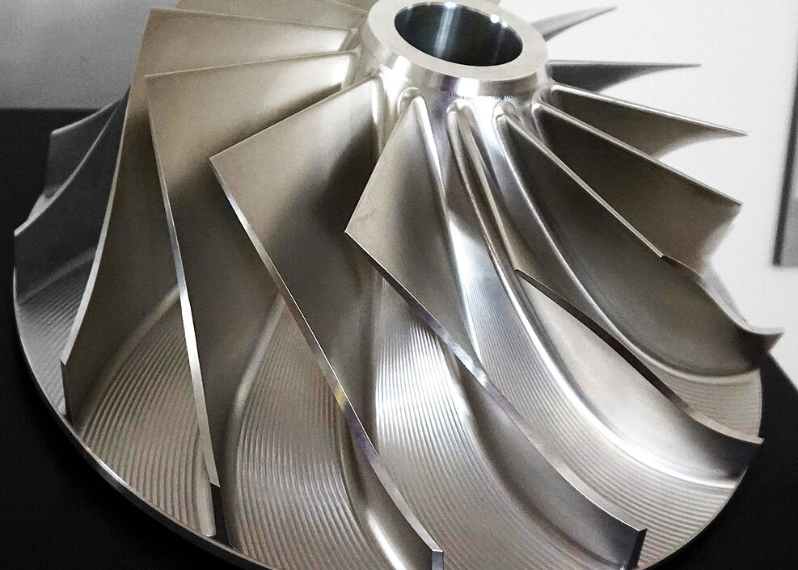
Key Takeaways:
Material of construction (MOC) isn’t just a technical but a strategic lever for all custom impeller manufacturing for industrial pump applications. Using the wrong impeller material can lead to corrosion and costly repair bills. But the right one ensures longevity and reliability across operations.
rivexa simplifies sourcing by matching MOC to application with traceability, QA testing, and vetted Indian suppliers, so there’s no need for guesswork and the possibility of increasing uptime.
Each industry or application needs a different MOC. Stainless steel impeller manufacturing in India work best in corrosive or sanitary environments (e.g., chemical or pharmaceutical industries). i.e., bronze or brass is ideal for marine applications; cast iron is for standard water handling with minimal corrosion risk.
A vital step in custom impeller manufacturing for industrial pump systems – when a pump fails, the first instinct is to blame the design, the fluid, or the RPM. But often the real culprit is more fundamental: the wrong material of construction (MOC) for the impeller.
Impellers and the material they’re made from (the heart of a pump system) help determine fluid compatibility, corrosion resistance, durability, and operating costs.
Unfortunately, MOC is often treated as a less important detail—until it fails. The consequence? Downtime, increased maintenance costs, or system-wide breakdowns. Choosing the right MOC isn’t optional—it’s essential.
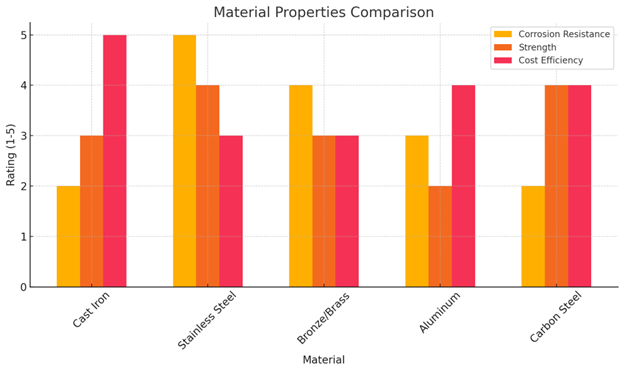
Major MOC Options for Custom Impeller Manufacturing
India’s manufacturing ecosystem offers a rich variety of MOCs for impellers—each with distinct properties, strengths, and use cases. Here’s a detailed look at the top choices:
| Material | Common Use Cases |
| Cast Iron | Water handling, HVAC, & irrigation |
| Stainless Steel | Chemical plants, food & beverage, pharma |
| Bronze/Brass | Marine vessels, desalination, offshore rigs |
| Aluminum | Portable pumps, battery-powered or compact systems |
| Carbon Steel | General industry (non-corrosive oils, coolants, air) |
Cast Iron
Cast iron offers good strength and durability for general-purpose pumps but corrodes easily with acidic or saline fluids.
Properties:
- Rigid
- Cost-effective
- Wear-resistant
Applications: Non-corrosive environments like
- water handling
- HVAC systems
- irrigation
Availability via rivexa: Usually used in open, semi-open, and vortex impellers for freshwater and utility applications.
Stainless Steel (SS 304/SS 316)
Suitable for preventing rusting or chemical degradation and maintaining structural integrity under high pressures or extreme pH levels. This makes it ideal for custom impeller manufacturing for industrial pump systems.
Properties:
- Excellent corrosion resistance
- Smooth surface finish
- High tensile strength
Applications:
- Food & beverages
- Chemical plants
- Pharma
- Anything involving corrosive or hygienic fluids
Availability via rivexa: Applied in closed and semi-open impellers through stainless steel impeller manufacturing in India, ranging up to 6500 kg for large-scale industrial pumps.
Bronze and Brass
Properties:
- Corrosion-resistant in marine environments
- High anti-friction qualities
Application:
- Marine vessels
- Desalination plants
- Offshore rigs
- Seawater circulation
Availability via rivexa: Common in vortex and semi-open impellers for low-pressure marine and coastal applications.
Aluminum
Ideal when weight savings are essential—like in battery-powered or mobile units. Less durable in abrasive or chemical environments.
Properties:
- Lightweight
- Thermally conductive
- Easy to cast and machine
Application:
- Portable or compact pumps
- Small-scale industrial uses
Availability via rivexa: Available in open and semi-open types with customized design specs.
Carbon Steel
Offers better mechanical strength than cast iron while being more economical than stainless steel.
Properties:
- High strength
- Cost-effective for mechanical loads
Application: General industrial uses where corrosion isn’t a major concern, like
- Oils
- Coolants
- Air
Availability via rivexa: Available in closed impellers where structural strength is prioritized over corrosion resistance.
Application-Based MOC Recommendations
Choosing the right impeller material depends heavily on the application, which can differ from fluid type, pressure, temperature, and exposure conditions. Here’s how MOC choices align with different industries:
Chemical Processing
Recommended MOC: Stainless Steel (SS 316)
Why: Chemical fluids are often acidic or corrosive. Through industrial impeller manufacturing with QA certification, SS impellers resist corrosion, cracking, and pitting. Application of both aggressive and reactive media.
- Common Impeller Types: Closed (for better containment)
- Size Range: (50 – 2200) mm
- Weight Range: (1 – 6500) kg
Food & Beverage/Pharmaceuticals
Custom impeller manufacturing for industrial pump applications:
Recommended MOC: Stainless Steel (Sanitary Grade)
Why: Food-grade stainless steel ensures cleanability and prevents contamination. It also resists acids used in CIP (Clean-in-Place) systems.
- Common Impeller Types: Semi-open or closed
- Size Range: (80 – 1400) mm
- Weight Range: (2 – 3200) kg
Marine & Offshore
These require specialized stainless steel impeller manufacturing in India
Recommended MOC: Bronze or Brass
Why: High resistance to saltwater corrosion and biofouling. It can be used continuously in coastal and open-sea conditions.
- Common Impeller Types: Vortex or semi-open for less clogging
- Size Range: (100 – 1000) mm
- Weight Range: (2 – 170) kg
Water & Wastewater Treatment
Recommended MOC: Cast Iron or Carbon Steel
Why: Cost-effective and durable for neutral fluids and sludge. Corrosion protection (e.g., epoxy coating) may be used where needed.
- Common Impeller Types: Vortex or open
- Size Range: (50 – 1800) mm
- Weight Range: (0.5 – 900) kg
General Industrial Applications
Recommended MOC: Carbon Steel or Aluminum
Why: For pumping non-corrosive fluids like oils, air, or cooling liquids. These materials balance weight, strength, and cost.
- Common Impeller Types: Open or closed
- Size Range: (50 – 2200) mm
- Weight Range: (1 – 6500) kg
Why MOC Impacts Lifecycle Cost, Not Just Price
MOC decisions often come down to budget. Some materials require custom impeller manufacturing for industrial pump specifications. But here’s what many buyers miss:
Cheaper materials almost always cost more over time.
Because:
1. Frequent Replacements = Higher Long-Term Costs
A low-cost impeller that corrodes or erodes quickly may need to be replaced multiple times within a year. It not only drives up parts costs but also labor and downtime.
2. Maintenance Complexity
Industrial impeller manufacturing with QA certification reduces emergency maintenance. Some materials, like bronze or stainless steel, wear more slowly and more evenly. It reduces emergency maintenance calls and unpredictable repairs.
3. Fluid Compatibility Affects Lifespan
Using carbon steel in a slightly corrosive environment might “work” for a while, but pitting corrosion can set in silently and cause sudden failure.
How rivexa Ensures MOC Accuracy
Our stainless steel impeller manufacturing in India capabilities include:
Material traceability: rivexa suppliers provide full MOC certificates.
Conformance to specifications: Each part is manufactured as per client-provided OEM drawings or global pump standards.
Batch-level QA: Tests and inspections ensure MOC consistency, especially in large-volume orders.
rivexa’s Industrial Impeller Manufacturing with QA Certification Advantage
At rivexa, we don’t just list impellers but connect you with the right supplier for your exact industry and fluid challenge. Here’s what sets us apart:
Vetted Supplier Network
Our partners have proven track records in industrial sectors from marine to pharma. We screen for MOC expertise and vertical-specific experience.
Custom Engineering Support
Need custom impeller manufacturing for industrial pump applications to match legacy equipment or an international specifications? Our suppliers work from CAD, reverse engineering, and OEM documentation.
Sourcing to Shipping Support
From RFQ to doorstep, rivexa manages everything—including packaging for international freight, compliance documents, and delivery timelines.
Certifications Available
Material Test Certificates (MTC), third-party inspections, and chemical composition reports can be provided for critical projects.
Final Note
If you’re selecting impellers solely based on price, you’re doing your project and your budget a disservice. Because the right material of construction for custom impeller manufacturing for industrial pump systems isn’t just about compatibility.
It’s about reliability, maintenance predictability, and long-term performance – especially in stainless steel impeller manufacturing in India, where material selection makes all the difference.
With rivexa’s industrial impeller manufacturing with QA certifications, you get more than parts—you get peace of mind. Because the right material, matched to the right application, makes all the difference.
Looking to source impellers or other industrial goods from India. Contact our IG experts here!

Leave a Reply