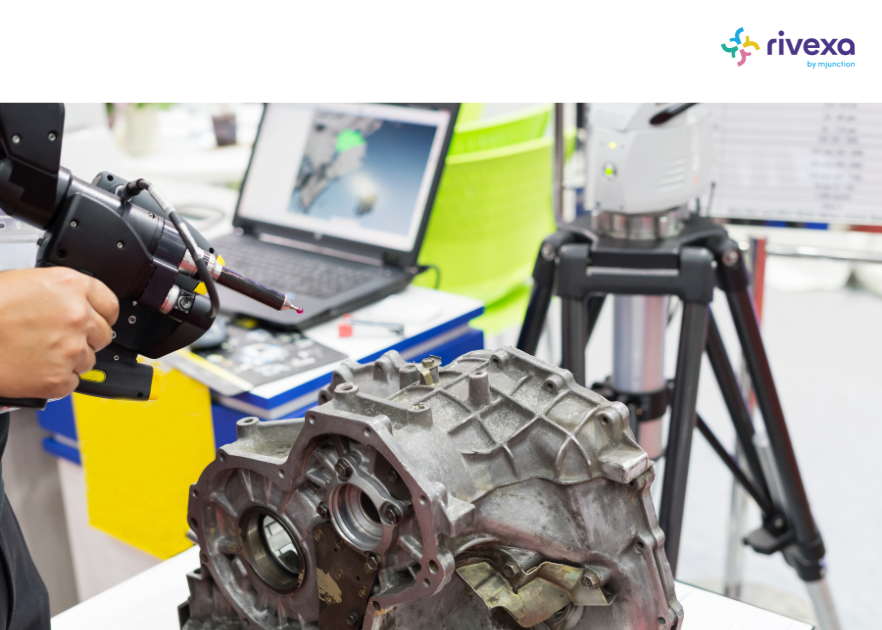
From reviving obsolete machinery to fast-tracking innovation, industrial manufacturing has entered a new era of reverse engineering. When blueprints go missing, and supply chains falter, this systematic breakdown process empowers companies to reproduce and revolutionize existing products. Manufacturing innovation takes many forms, but reverse engineering has emerged as a driver of progress. For industrial manufacturers, it’s the difference between costly equipment sitting idle and production lines running smoothly.
How Reverse Engineering Helps Extend the Life of Legacy Machinery
Challenges with Legacy Machinery
Industrial equipment is often used for decades, yet manufacturers phase out critical components, leaving companies in a bind. When replacement parts become scarce, businesses face unplanned downtime, performance issues, and costly equipment overhauls.
Role of Reverse Engineering
Through detailed component analysis, reverse engineering provides manufacturers with the blueprint to recreate discontinued parts by taking a closer look at their structure, composition, and purpose. This approach helps companies to:
- Create precise replicas using contemporary manufacturing methods
- Break free from dependency on OEMs’
- Enhance component performance with next-generation materials
Industry Insight:
McKinsey’s analysis shows that modern approaches to component obsolescence management can drive down engineering expenses by up to 35%, supporting the sustainable operation of legacy systems (McKinsey).
Using Reverse Engineering to Overcome Supply Chain Disruption in Manufacturing
Impact of Supply Chain Disruption:
Supply chain disruption has created widespread component scarcity, delivery delays, and rising procurement costs. Manufacturing operations dependent on single-source supplier for vital components experience production standstills that impact their bottom line.
Reverse Engineering as a Solution:
Reverse engineering enables businesses to work around these obstacles by:
- Creating capabilities for internal component production
- Diversifying away from sole-source supplier relationships
- Unlock options for substitute materials and production techniques
Industry Insights:
BCG’s findings show that supply chain resilience improves significantly when industrial suppliers adopt digital manufacturing tools and diverse sourcing strategies. Reverse engineering has emerged as a particularly successful approach, helping companies achieve good gains in operational efficiency (BCG Global).
Reducing Downtime: Reverse Engineering for Industrial Spare Parts & Components
Consequences of Downtime
Equipment failures lead to multiple impacts: lost output, increasing maintenance expenses, and eroded profit margins. Critical sectors like energy, aerospace, and automotive face severe challenges, where single component failures can disrupt entire production networks. Manufacturing innovation is crucial in preventing equipment failures, and reverse engineering has become a key part of this approach.
Reverse Engineering Benefits
- Swift component analysis and replication of failed parts
- Iterative design improvements for maximum reliability
- Value-driven repair solutions versus costly replacements
Expert Perspective
Findings show that early intervention in component obsolescence maintains operational continuity while reducing engineering costs and operational disruptions. Manufacturers leveraging reverse engineering for worn components prevent costly production interruptions (McKinsey).
How 3D Scanning and CAD Modeling Accelerate Product Development
Challenges in Traditional Product Development
Creating products using conventional methods involves significant time and resources, with multiple iterations of prototypes and validation cycles. Traditional manufacturing approaches often struggle to accommodate swift design alterations. Modern industrial manufacturing increasingly relies on digital tools to streamline product development and reduce time to market.
3D Scanning and CAD Advancements
Reverse engineering supported by 3D scanning and CAD transforms product innovation by:
- Generating precise digital replicas for efficient prototyping
- Supporting immediate design refinements and optimizations
- Improving collaborative efforts across production teams
Implementation in Manufacturing
Modern manufacturers employ 3D scanning for accurate dimensional capture and CAD modeling for virtual testing before production. Using this approach results in shorter development cycles, lowers material waste, and improves product standards.
Industry Insight:
Studies indicate that organizations embracing digital design solutions achieve significant gains in efficiency, prototype cost reduction, and market launch acceleration (BCG Global).
Modern industrial manufacturing requires the best in solutions to be able to take on the hurdles that today’s volatile market offers. Implementing reverse engineering to gain these benefits can help you stay ahead of the competition.
Our experts can help you find the right reverse engineering solutions to resolve specific challenges and explore growth opportunities. Contact us now.

Leave a Reply